

What Does Wildfire Ash Actually Do to Car Paint?
Wildfire ash damages paint in two distinct ways, and understanding both is key to diagnosing what your car needs. The Eaton and Palisades fires spread ash across a wide swath of LA County, far beyond the burn perimeters, affecting vehicles that never came close to a flame.
- Abrasive scratching. Ash particles are hard, sharp, and irregular. Dry-wiping them with a towel drags those particles across your clear coat like fine-grit sandpaper, leaving a web of micro-scratches that scatter light and make paint look dull.
- Chemical etching. Dry ash is relatively inert. The problem starts the moment moisture arrives. LA’s overnight marine-layer fog, morning dew, sprinkler drift, or a passing drizzle mixes with ash compounds and creates an alkaline, caustic layer that sits directly on your paint. That reaction can etch into the clear coat within roughly 24 to 48 hours of first contact with moisture.
The urgency here is specific to the LA coastal climate. A car left ash-covered over a weekend, collecting two or three cycles of marine-layer dew, can suffer damage that no weekend wash will undo. What looked like removable grime becomes permanent etching.
Paint Correction or Panel Respray: How Does a Body Shop Decide?
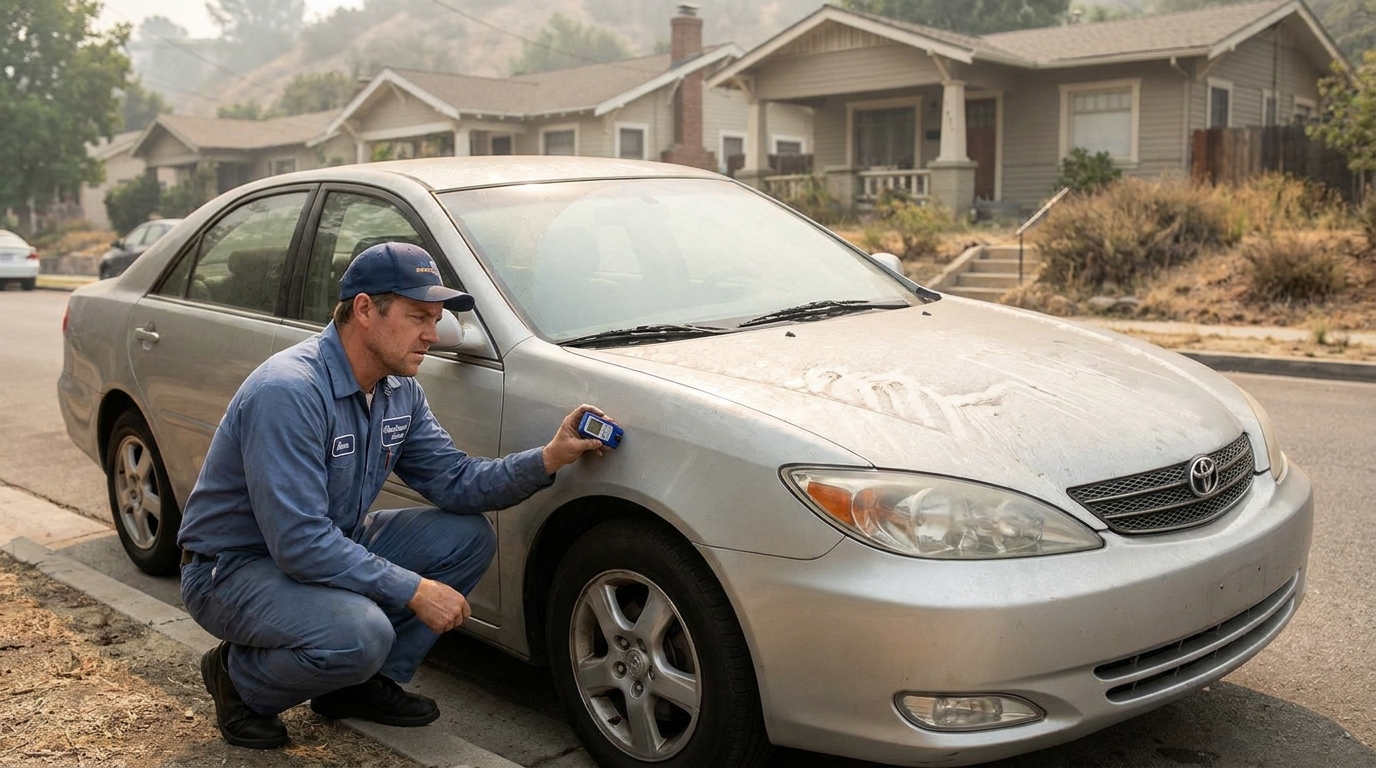
The single deciding factor is which layer of your paint system the etching has reached. A qualified body shop evaluates this with a paint-thickness gauge and visual inspection under proper lighting before recommending any repair path.
| Damage Depth | What You See | Correct Repair |
|---|---|---|
| Clear coat only (surface etching, hazing, water-spot rings) | Dull or milky finish; etching disappears when you wet the surface | Paint correction (machine polishing) |
| Into the color coat (deeper etch, visible color change or bare-looking spots) | Damage still visible when wet; may show a chalky or discolored patch | Panel respray required |
| Through to primer or bare metal | White or gray substrate showing; panel may feel rough to the touch | Full panel respray, possible surface prep or filler work |
Paint correction works by removing a controlled, thin layer of clear coat through machine polishing, leveling out the etched surface to restore gloss. The catch is that a vehicle only has so much clear coat to work with. If the etching has already broken through into the color coat or primer, no amount of polishing will bring back the original finish. At that point, the panel must be refinished. This is the same principle that applies to bird dropping and tree sap paint etching repair, where the damage mechanism is chemically similar.
One quick field test: run a clean, damp fingertip over the dull area. If the finish looks normal when wet and dulls again as it dries, the damage is likely still in the clear coat and correction may save it. If it looks damaged even when wet, the color coat is involved and a respray is the path forward.
What Does Ash Paint Damage Repair Cost in Los Angeles?
LA labor rates and booth costs mean refinish pricing here runs higher than national averages. The range below reflects quality independent body shops across the LA metro, including areas like Pasadena, West Hollywood, Santa Monica, and the Valley.
| Repair Type | LA Cost Range | When It Applies |
|---|---|---|
| Paint correction (machine polish, 1-3 panels) | $150 – $500 | Clear-coat-only etching, light hazing |
| Spot blend / touch repair | $300 – $600 | Small isolated deep-etch spots within a panel |
| Single-panel respray | $500 – $1,200 | Color-coat damage on one panel (door, fender, etc.) |
| Multi-panel respray (2-4 panels) | $1,500 – $3,500 | Hood, roof, and trunk all etched through |
| Full-hood respray | $1,200 – $2,500 | Most exposed horizontal panel; frequent ash target |
| Full-car respray (quality shop) | $3,000 – $10,000+ | Widespread color-coat damage across all surfaces |
One cost driver that surprises many LA drivers: blending. When a shop resprays a single door or fender, the adjacent panels often need to be blended so the new paint fades seamlessly into the original finish. Color matching is never perfect across panel gaps otherwise, especially on vehicles more than a few years old where the original paint has shifted slightly with UV exposure. Blending one or two extra panels adds labor but is standard practice at a reputable shop. For a detailed look at why this matters, see our guide on car fire damage repair in Los Angeles, where the same blending principles apply to smoke-affected vehicles.
Does Car Insurance Cover Wildfire Ash Paint Damage?
Yes, wildfire ash paint damage is covered under comprehensive auto insurance, not liability or collision coverage. Comprehensive is the portion of your policy designed for non-collision losses: fire, theft, hail, falling objects, and natural-disaster events including ash and smoke from wildfires.
Liability-only policies pay nothing toward damage to your own vehicle from any cause. If you carry only the minimum California required coverage, the repair cost comes entirely out of pocket.
What comprehensive typically covers for ash damage:
- Paint etching and surface hazing caused by ash chemical reaction
- Panel respray or paint correction costs
- Professional decontamination and interior remediation from smoke/ash infiltration
What comprehensive does not cover:
- Pre-existing UV fade, oxidation, or age-related clear-coat failure (adjusters are trained to distinguish these from fresh etching)
- Routine maintenance items like air filter replacement
- Mechanical failures attributed to smoke exposure
How Does the Deductible Math Work for an Ash Claim in LA?
Your deductible applies before the insurer pays anything. Common comprehensive deductibles run from $100 to $2,000, with $500 being the most typical. Here is how to think through whether to file:
- Repair estimate under your deductible: Do not file. You will pay the full amount either way, and a claim still gets recorded on your policy, which can raise your future premium.
- Repair estimate slightly above your deductible (say, $600-$800 on a $500 deductible): Weigh it carefully. Your net recovery is small, and a rate increase over the next two or three renewal cycles can easily exceed it. Paying out of pocket often makes more sense here.
- Repair estimate of $1,500 or more above your deductible: Filing generally makes sense. The insurer absorbs the majority of the cost, and even with some premium movement, the math typically favors filing.
- Multi-panel respray or full-car refinish ($2,500 and up): File. The out-of-pocket exposure without insurance is significant, and this is precisely what comprehensive is for.
If your estimate lands right at the edge, ask the shop whether supplemental damage (blending panels, minor interior soot cleanup) could push the total higher before you decide. A written estimate from a licensed body shop is the document the adjuster needs anyway, so get it first before committing to a claim decision.
How to Prove Wildfire Ash Causation to a Skeptical Adjuster
Ash paint claims can get flagged by adjusters who cannot easily distinguish fresh ash etching from pre-existing sun damage or neglect. The documentation you bring to the claim is what determines a smooth payout versus a denial. Collect all of the following before you call your insurer:
- Timestamped photos taken immediately after the ash event. Photograph the ash while it is still visibly on the vehicle, before any washing. Close-ups showing ash in the etched areas are particularly valuable because they establish causation directly.
- Your location during the fire. Even if you were miles from the Eaton or Palisades burn perimeter, document your address and note that ash traveled well beyond the active fire zone. News reports, air-quality alerts, and neighborhood social media archives can help place your vehicle in the ash-fall area.
- Neighborhood ash reports and air quality data. The South Coast AQMD publishes air quality records for LA zip codes. A record showing extreme particulate levels on the relevant dates supports your timeline.
- Before-and-after documentation. Any recent photos of your car showing undamaged paint, even casual snapshots, help establish that the damage is new and not pre-existing.
- A written body shop assessment. A licensed shop’s written inspection noting ash etching, damage depth, and the recommended repair carries more weight with an adjuster than a driver’s description alone.
The key distinction that matters to your insurer: ash etching typically appears as irregular, distributed hazing or dull spots across horizontal surfaces (hood, roof, trunk) that follow the ash-fall pattern. Pre-existing UV oxidation tends to be uniform across the entire vehicle and most severe on panels with maximum sun exposure. A body shop assessment can articulate this distinction in writing for your claim file.
The LA Time-Sensitivity Factor
Most Los Angeles drivers know they should wash ash off quickly, but fewer understand the specific mechanism that makes delay so costly here. LA’s marine-layer fog rolls in overnight and coats surfaces with a fine mist, even on clear-sky days. That moisture is enough to activate the alkaline compounds in wildfire ash. A car left ash-covered for even one overnight marine-layer cycle is accumulating chemical contact time. Two or three cycles, roughly the span of a typical “I’ll get to it this weekend” delay, can be enough to push surface etching past the clear coat and into the color coat, converting a $300 paint-correction job into a $1,200 panel respray.
If your vehicle is currently coated in ash from a recent fire event and you have not yet washed it, rinse it thoroughly with flowing water before anything else. Do not dry-wipe. Do not use a brush. Soak each panel to loosen and float the particles before any contact washing. That single step, taken before a shop visit, can be the difference between correction and refinishing.
Common Mistakes to Avoid
- Dry-wiping ash off the vehicle. Ash particles are abrasive. Dragging them across your paint with a cloth, even a microfiber one, creates scratches that compound the existing damage.
- Waiting to wash until the weekend. In LA’s marine-layer climate, even one or two overnight dew cycles can push ash etching from the clear coat into the color coat. Act within 24 hours if possible.
- Filing a claim below or barely above your deductible. The premium impact over two or three renewals often exceeds the small recovery. Get a written estimate first and do the math before calling your insurer.
- Confusing ash etching with pre-existing sun damage when talking to an adjuster. Lack of documentation makes it easy for an insurer to attribute fresh ash etching to normal wear. Photos and a shop assessment are essential.
- Skipping panel blending on a multi-panel respray. Repainting only the damaged panels without blending adjacent ones leaves visible color variation at the panel gaps. Insist on blending in your estimate.
- Assuming the damage is cosmetic-only. Ash that has been wet and dried repeatedly can also penetrate door seals and cabin air intakes. Ask the shop to inspect trim, rubber seals, and the HVAC filter as part of the assessment.
Frequently Asked Questions
Does car insurance cover wildfire ash paint damage in Los Angeles?
Yes. Wildfire ash paint damage is covered under the comprehensive portion of your auto policy, which handles non-collision losses including fire, smoke, and ash. Liability-only coverage pays nothing toward damage to your own vehicle. Your comprehensive deductible applies, so calculate the net recovery before deciding whether to file.
Can paint correction fix ash-etched paint, or does it always need a respray?
Paint correction (machine polishing) can fully restore the finish when the ash etching is confined to the clear coat. Once etching reaches the color coat or primer, paint correction cannot restore it, and a panel respray is the only correct repair. A body shop can determine the damage depth with a paint-thickness gauge before recommending either path.
How long does wildfire ash take to damage car paint in Los Angeles?
Dry ash is relatively harmless, but LA’s overnight marine-layer fog provides moisture that activates the alkaline compounds in ash. Chemical etching can begin within roughly 24 to 48 hours of the ash getting wet. Vehicles left ash-covered through multiple overnight marine-layer cycles risk etching that goes beyond the clear coat.
How much does ash paint damage repair cost in Los Angeles?
Paint correction for clear-coat-only etching typically runs $150 to $500 in LA. A single-panel respray costs $500 to $1,200, multi-panel refinishing runs $1,500 to $3,500, and a full-car respray at a quality shop starts around $3,000 and can exceed $10,000 for luxury or specialty vehicles. Blending adjacent panels adds labor but is standard practice for a seamless result.
What documentation do I need to file a comprehensive ash paint claim?
Photograph the ash on the vehicle before washing, noting the specific damaged areas. Document your vehicle’s location during the fire event, save any local news or air-quality records showing ash fall in your neighborhood, and obtain a written repair assessment from a licensed body shop. This combination establishes that the damage is ash-caused rather than pre-existing wear, which is the primary point of adjuster scrutiny on cosmetic paint claims.
0 Comments