

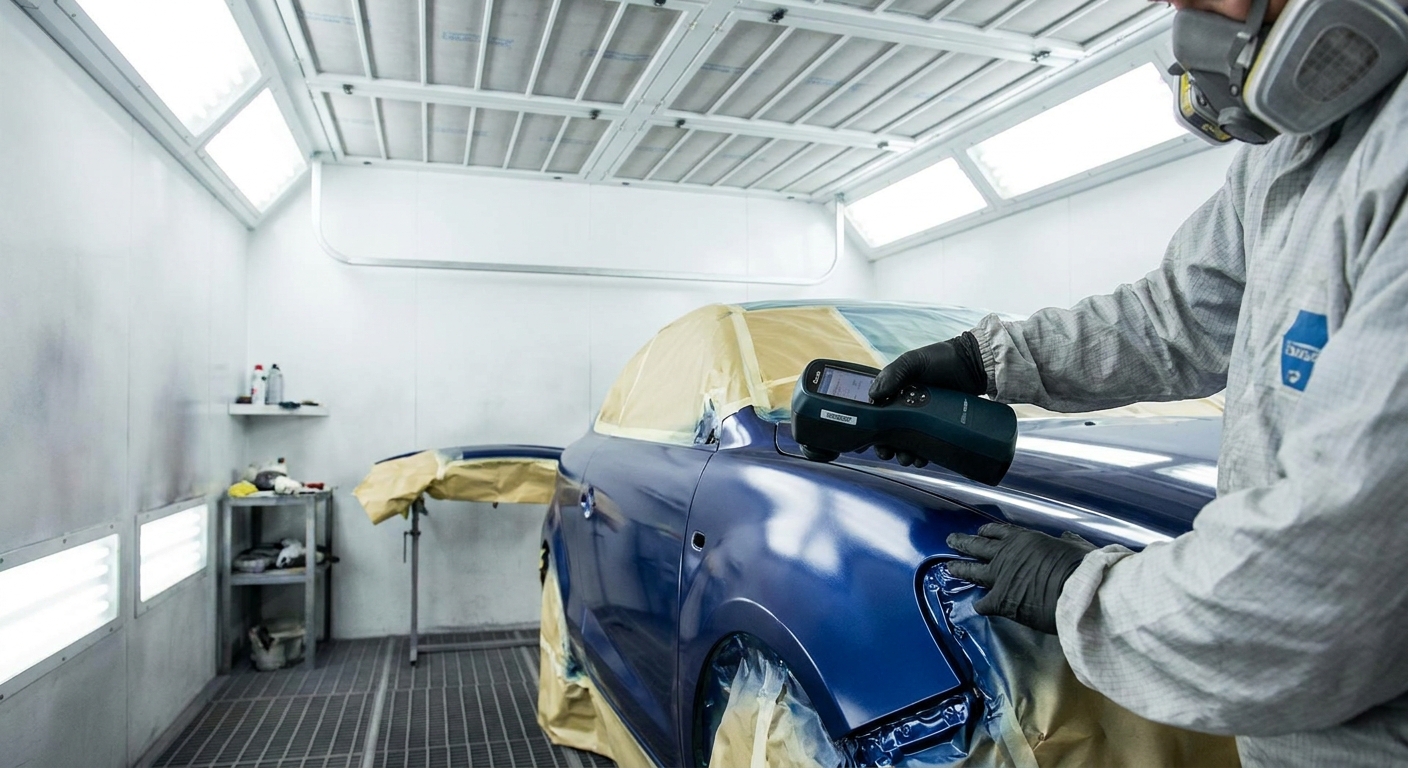
Getting the color right is one of the hardest parts of auto body work, which is why professional shops invest so much in paint matching and blending. Even “the same” factory color varies from car to car after years of sun and wear, so matching a repair to your existing paint is part science, part craft. Here is how color matching and blending actually work, and why they make or break a repair’s appearance.
Why isn’t matching paint as simple as the color code?
Your car has a factory paint code, but the color on the car today is not exactly that code. Sun exposure, age, and even the original factory application cause subtle drift, so two cars with the same code can look noticeably different. A painter has to match the color as it exists now, not just look it up, which is why a code alone is only a starting point.
How do shops match color?
Quality shops use a spectrophotometer, a tool that reads your car’s actual color and helps formulate a precise match, then refine it by spraying test cards (“let-down panels”) and comparing in proper lighting. The painter adjusts the mix until the sprayout matches the vehicle under different light, because a match that looks right indoors can look off in sunlight.
What is blending, and why is it needed?
Even a great color match can show a hard edge if a new panel is painted and stopped at the seam. Blending feathers the new paint into the adjacent panels so the transition is invisible, which is especially important for metallics and pearls where the angle of the flakes affects how color reads. Blending into neighboring panels is standard, professional practice, not padding on the estimate.
| Factor | Why it complicates matching |
|---|---|
| Sun fading / age | Current color differs from the factory code |
| Metallic / pearl finishes | Flake orientation changes how color looks by angle |
| Tri-coat colors | Multiple layers must be replicated exactly |
| Lighting | A match can look perfect indoors and off outside |
Why it matters for your car
A precise match and proper blend keep the repair invisible and protect resale value, mismatched paint is one of the first things buyers and appraisers notice. It is also a safety and durability matter: proper prep, primer, and clear coat ensure the finish lasts and resists corrosion, not just looks good on day one.
What to expect and ask
- Ask whether the shop uses computerized color matching and test sprayouts.
- Expect blending into adjacent panels on metallic and pearl colors.
- Understand that blending adjacent panels is normal and improves the result.
- Check the match in daylight, not just under shop lights, before pickup.
Frequently asked questions
Why does the shop need to paint more than the damaged panel?
Blending into adjacent panels hides the transition and is often necessary for an invisible match, especially with metallics.
Will the repaired area match exactly?
A skilled shop with the right tools gets a match that is indistinguishable in normal viewing; perfect science-grade identity is rare but a good blend makes it invisible.
Does paint matching affect resale value?
Yes, visible color mismatch lowers perceived quality and value, while a proper match and blend preserve it.
The bottom line
Color matching and blending are where craftsmanship shows. A quality Los Angeles shop reads your car’s actual color, formulates and tests the match, and blends into adjacent panels so the repair disappears, protecting both appearance and resale value. If a quote skips blending on a metallic color, ask why.
0 Comments