

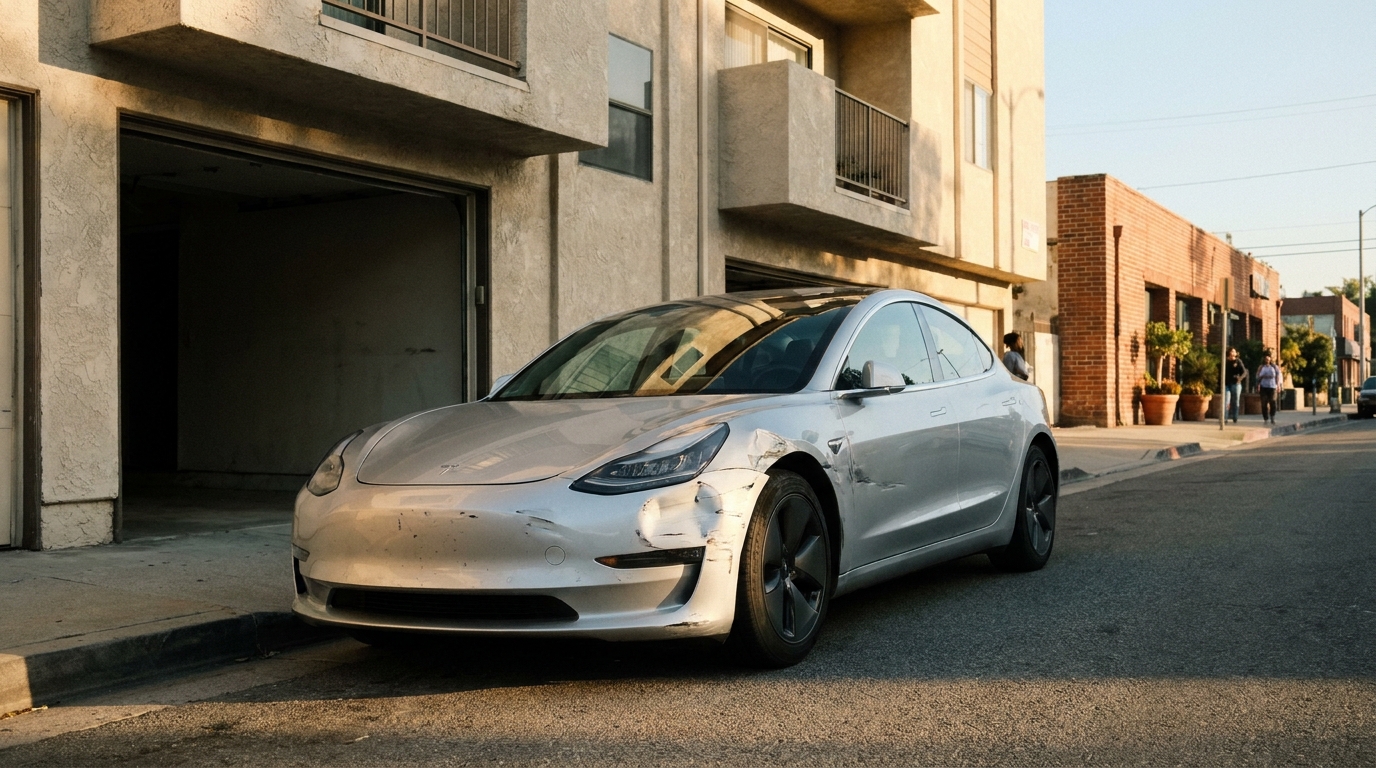
What Does an Auto Body Shop in Culver City Actually Cost to Use?
If you need an auto body shop in Culver City, the first thing to know is that Westside repair bills run above the LA average, and the LA average already sits 15–25% above national benchmarks. Labor rates on the Westside generally run $75–$150 per hour depending on shop certifications and equipment, compared to roughly $56–$72 per hour in lower-cost LA neighborhoods. That gap adds up fast on any job requiring more than a few labor hours.
The table below gives honest Westside-calibrated ranges by damage type. These are real repair scenarios, not teaser prices.
| Damage Type | Westside Cost Range | Typical Timeline | Notes |
|---|---|---|---|
| Bumper scuff / surface scratch (PDR or touch-up) | $150–$600 | Same day–2 days | PDR if no paint break; respray if paint cracked |
| Cracked or broken bumper cover | $700–$1,800 | 2–4 days | Add $300–$700 for sensor/camera recalibration on EVs or modern vehicles |
| Door ding or single-panel dent (PDR-eligible) | $150–$400 per dent | 1–2 days | Must have no paint damage and accessible backside |
| Door panel repair with repaint | $500–$1,500 | 3–5 days | Color blend to adjacent panels adds cost |
| Fender repair or replacement | $900–$2,500 | 3–5 days | Replacement often faster than repair on severe bends |
| Quarter panel damage | $1,200–$4,000 | 4–7 days | Welded structure; replacement involves more labor than bolt-on panels |
| Frame / structural straightening (minor) | $2,500–$5,000 | 5–10 days | Requires frame machine and post-repair alignment |
| Frame / structural (moderate to severe) | $5,000–$15,000+ | 10–21+ days | Multi-panel, welding, ADAS calibration; total-loss risk rises sharply |
Labor is typically the largest single line item on any estimate, often representing more than half the total bill. Always ask for a written, itemized estimate before authorizing work so you can compare labor hours, parts type (OEM vs. aftermarket), and any scan or calibration fees as separate line items.
Why Do Culver City Drivers See Specific Damage Patterns?
The local geography creates repeatable claim scenarios that differ from other LA neighborhoods. Knowing them helps you understand why your estimate may be higher than you expected.
- Tight condo and apartment garages near Playa Vista and the Helm’s Bakery district. Low clearances and narrow turning radii are the leading cause of bumper scrapes and door pillar contact. Even a slow-speed garage clip can crack a bumper cover and require sensor recalibration.
- Valet damage at Culver Steps, Platform, and the Westfield Culver City. Valets operating in tight surface lots are a frequent source of door dings, wheel scuffs, and low-speed bumper contact. If valet caused the damage, the valet company’s liability policy is the first source of payment. For a full breakdown of that claims path, see our guide to valet car damage repair in Los Angeles.
- Street-parking door dings on Washington Blvd, Venice Blvd, and Culver Blvd. High-density street parking produces door-edge dings constantly. Most qualify for paintless dent repair as long as the paint hasn’t cracked.
- La Cienega / Washington / Jefferson corridor fender benders. These three arterials carry heavy stop-and-go traffic and are where the majority of rear-end and angle collisions happen for Culver City drivers. Rear-end hits in particular often involve hidden damage to bumper reinforcement bars, trailer hitch receivers, or crush cans that an initial visual inspection misses.
- High EV and hybrid density. Culver City and adjacent Playa Vista have among the highest EV ownership rates on the Westside. That matters for repair because modern bumpers on EVs contain radar sensors, cameras, and parking sonar that require calibration after any bumper work.
What Is Different About EV and Tesla Collision Repair in Culver City?
The Westside has a dense concentration of Teslas, Rivians, and other EVs, and those vehicles have repair requirements that most general shops are not equipped to handle correctly.
- ADAS calibration is mandatory after bumper work. Any repair that involves removing or repainting a bumper on a vehicle with radar, cameras, or parking sensors requires a post-repair calibration procedure. Skipping it leaves safety systems misaligned. Budget $300–$700 for calibration as a separate line item.
- Tesla paint thickness limits. Tesla’s repair guidelines restrict paint build on sensor-area bumpers to roughly the factory coat plus one refinish, approximately 300 microns total. Beyond that threshold, Tesla recommends replacement over respray. A shop unfamiliar with this spec may repaint rather than replace, creating future sensor accuracy issues.
- High-voltage safety protocols for EVs. Any structural repair on an EV requires a shop trained to disable the high-voltage system before cutting or welding near battery enclosures. Confirm this capability before authorizing structural work on any EV.
- Aluminum and mixed-material construction. Many EV unibodies use aluminum alloys that require dedicated tooling, separate repair bays, and technicians certified in aluminum repair. Cross-contamination with steel tools causes galvanic corrosion.
For a deeper look at the Tesla-specific cost and sensor angle, the post on auto body shop Santa Monica covers the same Westside EV context in detail.
Which “Culver City” Shops Are Actually in Culver City?
This is a transparency point that no competing page addresses directly: several shops that rank on “auto body shop Culver City” searches are physically located outside Culver City and keyword-target the name. One prominent option operates from Encino; another from DTLA. That is not necessarily disqualifying, but it affects tow distance, pickup logistics, and how quickly a supplement inspector can reach the vehicle. When evaluating any shop:
- Confirm the physical address is a licensed California Bureau of Automotive Repair (BAR) facility.
- Ask whether the shop handles insurance supplements on-site or routes them to a separate location.
- Confirm whether free tow or pickup covers your specific Culver City address, not just a general “Westside” service area.
- Ask if the shop has a loaner or rental coordination program, since Culver City has limited Enterprise or Enterprise-equivalent rental availability compared to Santa Monica or the airport corridor.
How Long Does Collision Repair Take for Culver City Drivers?
Timelines vary more than most shops advertise. The “2–7 day” figure that appears on several competing sites applies to straightforward single-panel repairs with parts in stock. Real-world timelines for Culver City drivers depend on several factors beyond shop speed.
| Repair Scenario | Realistic Timeline | Main Variables |
|---|---|---|
| PDR dent removal, no paint | Same day–1 day | Panel accessibility, number of dents |
| Single bumper repair with repaint | 2–4 days | Parts in stock; sensor calibration adds 1 day |
| Single panel (door, fender) repair and paint | 3–5 days | Color match complexity, blending adjacent panels |
| Multi-panel moderate collision | 7–14 days | Parts sourcing (OEM often 5–10 day lead time), supplement approval |
| Structural / frame repair | 10–21+ days | Frame machine availability, parts, insurer re-inspection |
| Luxury or EV with multiple ADAS sensors | Add 2–5 days to any above | OEM parts-only requirements, calibration appointments |
If your repair will take more than a few days, ask your insurer about loss-of-use or rental reimbursement coverage. California insurers handling a third-party claim are required to provide a comparable rental while your vehicle is out of service. Confirm the daily rental rate your policy covers before committing to a vehicle class.
What Are Your California Insurance Rights After a Collision?
California law gives collision repair claimants specific, enforceable rights. Most insurers do not volunteer these at first contact.
- Right to choose your own shop. California Insurance Code §758.5 prohibits any insurer from requiring you to use a specific repair facility. Your insurer may recommend a Direct Repair Program (DRP) shop, but it cannot require you to use one and cannot penalize you for choosing your own. Tell the adjuster: “I’m choosing my own shop under Insurance Code 758.5.” The insurer must then pay the reasonable cost of repair at whatever licensed shop you select.
- Claim acknowledgment and payment deadlines. Under California insurance regulations, an insurer handling a property-damage claim must acknowledge the claim within 15 calendar days and must pay or deny within 30 calendar days after reaching agreement on the amount. If your insurer is dragging past these deadlines, that is a basis for a complaint to the California Department of Insurance.
- Total Loss Formula (TLF), not a flat percentage. California does not use a fixed percentage threshold to declare a total loss. Instead, it uses the Total Loss Formula: a vehicle is a total loss when the cost of repairs plus the salvage value is equal to or greater than the vehicle’s pre-accident actual cash value (ACV). On the Westside, elevated labor rates mean the repair side of that equation reaches the ACV threshold faster than it would in a lower-cost market, especially on older or high-mileage vehicles.
- Minimum 90-day / 4,000-mile repair warranty. California law requires every licensed auto body shop to warranty collision repairs for at least 90 days or 4,000 miles, whichever comes first. Many quality shops offer lifetime warranties on parts and labor, which is a meaningful differentiator to ask about.
- DMV SR-1 report. You must report any crash involving injury, death, or property damage that appears to exceed $1,000 to the California DMV within 10 days using an SR-1 form. This is separate from your insurance claim and separate from any police report. Most collision damage in Culver City easily exceeds $1,000, so this requirement applies in nearly every case.
- Auto Body Repair Consumer Bill of Rights. California law requires your insurer to provide this document when you open a claim. It lists your rights on shop selection, written estimates, parts identification, and complaint procedures. If your insurer does not provide it, ask for it in writing.
- Uninsured Motorist Property Damage (UMPD). If an identified uninsured driver caused your damage, your UMPD coverage can apply, subject to your policy terms and California coverage rules. UMPD does not apply if the at-fault driver cannot be identified (that scenario falls under collision or comprehensive coverage, depending on the facts).
How to Evaluate an Auto Body Shop in Culver City: A Decision Checklist
Use these criteria to narrow your choice before committing a vehicle to any shop:
- Physical location confirmed at a Culver City or immediately adjacent address (not keyword-targeting from Encino or DTLA).
- California BAR license visible and verifiable at bar.ca.gov.
- I-CAR Gold Class certification for the shop, not just one technician. This is the collision industry’s top training benchmark.
- OEM certification for your make if you drive a Tesla, Rivian, Porsche, BMW, or other brand with manufacturer repair standards. OEM-certified shops follow factory procedures and are more likely to source correct parts. For a full breakdown of what OEM certification means, see our post on OEM certified collision centers in Los Angeles.
- Written itemized estimate before any work begins. Verbal quotes are not enforceable.
- ADAS calibration capability in-house, confirmed before authorizing bumper or front-end work on any modern vehicle.
- Loaner or rental coordination confirmed for multi-day repairs.
- Supplement process explained before work starts. Hidden damage discovered during disassembly is normal in collision repair; a good shop photographs it and submits a written supplement to the insurer before proceeding.
Common Mistakes to Avoid
- Accepting the insurer’s recommended shop without asking why. DRP shops have cost-control agreements with insurers. That can work fine, but you have the legal right to choose your own shop under California Insurance Code §758.5, and you should use it deliberately rather than by default.
- Skipping the SR-1 DMV filing. Most Culver City collision repairs exceed $1,000. Failing to file the SR-1 within 10 days can result in license suspension.
- Getting only one estimate. On any repair over $1,500, get at least two written estimates so you can compare labor hours, parts sourcing, and calibration charges.
- Approving bumper repairs without asking about sensor recalibration. Any vehicle with parking sensors, radar, or a backup camera needs calibration after bumper work. Confirm this is included in the estimate or priced separately before authorizing work.
- Ignoring total-loss math on older or high-mileage vehicles. Westside labor rates push repair costs up quickly. If your car’s ACV is under $12,000–$15,000, run the Total Loss Formula against your estimate before authorizing major structural work.
- Choosing a shop based on proximity alone. Several shops that rank for Culver City are not physically in Culver City. Confirm the address before towing your vehicle.
- Not asking about the warranty in writing. California law sets a 90-day minimum, but a shop offering a lifetime warranty on parts and labor is a materially better choice for any significant repair.
Frequently Asked Questions
How much does collision repair cost at an auto body shop in Culver City?
Minor repairs, such as a single bumper scuff or PDR dent, run $150–$700. Mid-range repairs including cracked bumpers, door panels, and fenders run $700–$2,500. Major repairs involving multiple panels or structural work run $5,000–$15,000 or more. Westside labor rates of $75–$150 per hour mean estimates run higher than the national average, and EV sensor recalibration adds $300–$700 on top of any bumper or front-end job.
Can I choose my own auto body shop in Culver City, or does my insurance decide?
You choose the shop. California Insurance Code §758.5 prohibits any insurer from requiring you to use a specific repair facility. Your insurer can recommend a Direct Repair Program shop, but it cannot require you to use one and cannot reduce your coverage or raise your deductible if you go elsewhere. Tell your adjuster which shop you have chosen and direct them to send the assignment there.
How long does auto body repair take for a Culver City driver?
PDR and single-panel jobs take 1–5 days. Multi-panel moderate collision repairs typically run 7–14 days when parts sourcing and supplement approval are factored in. Structural repairs take 10–21 or more days. EV and luxury vehicles with OEM parts requirements and ADAS calibration needs add 2–5 days to any of these ranges. Parts availability, not shop speed, is usually the binding constraint on the Westside.
Does California require me to file a DMV report after a Culver City accident?
Yes. Any crash involving injury, death, or property damage that appears to exceed $1,000 must be reported to the California DMV within 10 days using the SR-1 form. This applies regardless of fault and is separate from your insurance claim and any police report. Nearly all collision damage in Culver City exceeds the $1,000 threshold.
How does California decide if my car is a total loss?
California uses the Total Loss Formula: your vehicle is declared a total loss when the estimated repair cost plus the salvage value equals or exceeds the vehicle’s pre-accident actual cash value. There is no fixed percentage threshold as in some other states. On the Westside, elevated labor rates mean the repair side of the equation reaches the ACV of older vehicles quickly, so total-loss outcomes are more common here than in lower-cost California markets.
0 Comments