

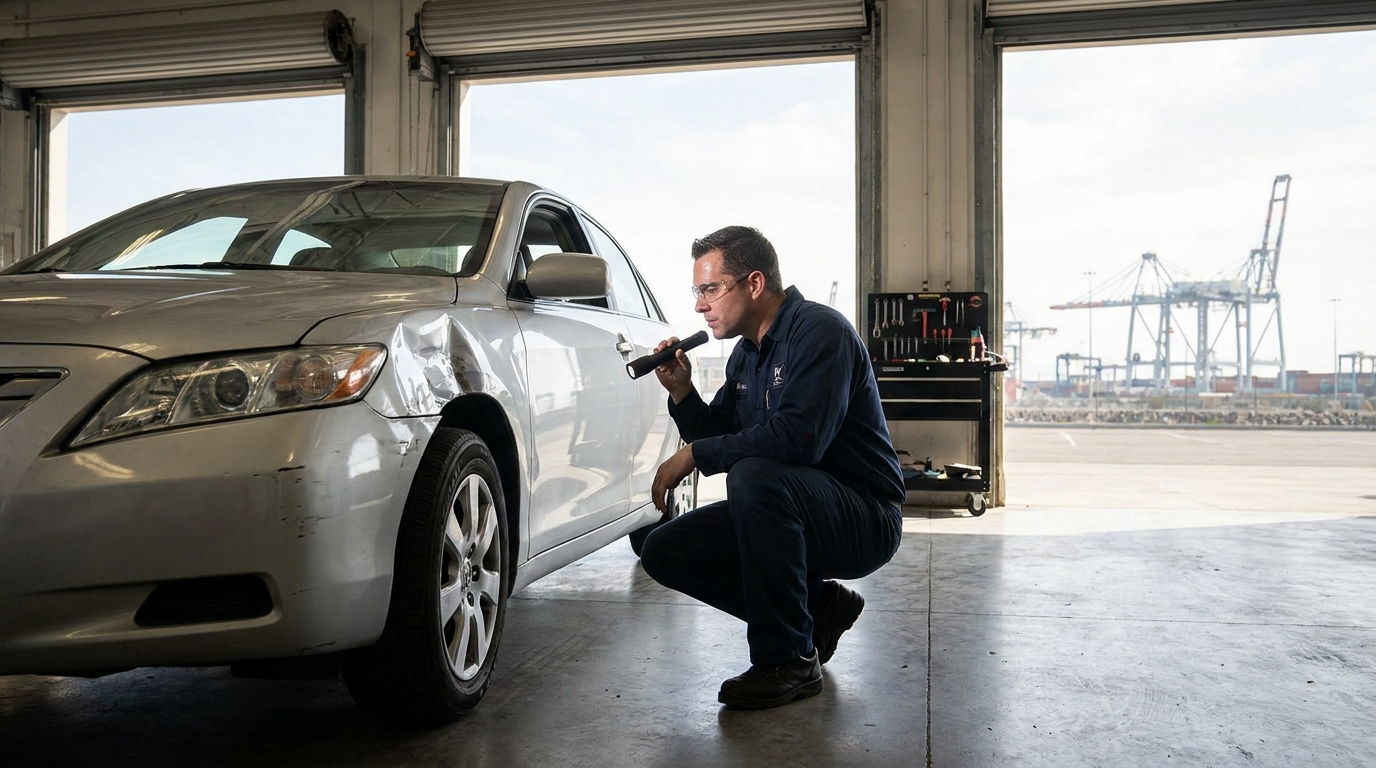
What Does Collision Repair Actually Cost at a Long Beach Auto Body Shop?
Repair costs in Long Beach range from roughly $500 for a minor bumper scuff to $8,000 or more for moderate structural damage, with the realistic mid-range for a typical crash sitting between $1,850 and $3,100. A national average near $2,200 is a useful anchor, but several local factors push Long Beach estimates higher than that figure suggests.
Southern California auto body labor rates commonly run $50 to $120 per hour at independent shops, climbing to around $159 per hour at higher-tier certified facilities. Parts cost, sensor complexity, and the number of panels involved multiply quickly. The table below gives you a realistic bracket by damage type.
| Damage Type | Typical Long Beach Cost Range | Key Cost Drivers |
|---|---|---|
| Minor bumper scuff / scratch | $300 – $900 | Paint blending, PDR eligibility |
| Bumper repair or replacement | $500 – $2,500 | Integrated sensors, model, finish |
| Single-panel fender or door | $800 – $2,200 | OEM vs. aftermarket parts, labor rate |
| Multi-panel moderate collision | $2,000 – $5,000 | Supplements, ADAS calibration, alignment |
| Severe structural / frame damage | $5,000 – $8,000+ | Frame straightening, airbag replacement |
Bumper work deserves special attention: modern bumpers on many vehicles contain parking sensors, radar modules, and camera mounts. Replacing and recalibrating those ADAS components after a bumper repair is a real line item that many drivers see for the first time when they read the final estimate. If your vehicle has forward-collision warning, lane-keep assist, or adaptive cruise, ask the shop upfront whether calibration is included. For a deeper look at that process, see our guide on collision repair costs and timelines for LA-area drivers.
Why Does Long Beach Have Higher Repair Risk Than Most California Cities?
Long Beach sits at the intersection of three distinct collision-risk factors that distinguish it from quieter suburban markets.
- 710 Freeway truck corridor: The I-710 runs directly from the Port of Long Beach through the city’s core. Heavy truck traffic generates a disproportionate share of multi-vehicle incidents and cargo-related road hazards. A sideswipe with a commercial truck often means structural damage, not just panel work.
- Port-area surface-street congestion: Dock-to-distribution routes push high volumes of freight traffic onto surface streets including Anaheim Street, Pacific Coast Highway, and the Long Beach Traffic Circle, slow-speed, high-frequency collision zones.
- High uninsured driver rate: Data from The Zebra shows that nearly 31% of Long Beach drivers carry no insurance. That is roughly one in three cars on the road. When an uninsured driver hits you, the question of who pays for your car repair changes dramatically.
What Happens to Your Repair When the Other Driver Has No Insurance?
This is the scenario that catches Long Beach drivers off guard most often. If the at-fault driver is uninsured, their nonexistent liability policy cannot pay for your car. You have two realistic paths:
- Uninsured Motorist Property Damage (UMPD): If you added UMPD to your policy, it covers your vehicle damage caused by an uninsured driver, up to your policy limit, minus your deductible. California insurers must offer this coverage, though you can waive it in writing.
- Your own collision coverage: Collision pays to repair or replace your car regardless of who caused the accident, minus your deductible. Your insurer can then pursue the at-fault driver directly through subrogation, which may eventually recover your deductible. Collision is optional in California but, in a market where nearly one in three drivers is uninsured, it is the most reliable path to getting your car fixed quickly.
California’s minimum liability requirement is $30,000 bodily injury per person / $60,000 per accident / $15,000 property damage. That minimum property-damage coverage is designed to pay for damage you cause to someone else’s vehicle, not your own. Drivers who carry only minimum liability have no coverage to fix their own car after a crash, a critical point in a city with Long Beach’s insurance profile.
One more protection worth knowing: under California law, your insurer cannot raise your premiums for a not-at-fault accident. Filing a claim through your own collision coverage after being hit by an uninsured driver should not result in a rate increase.
How Does the California Insurance Claim Process Work Step by Step?
The process moves in a predictable sequence once you know the steps. Here is what to expect from collision to paid repair:
- Report the accident and gather documentation. Exchange information, photograph all damage, and file a police report if there is injury or significant damage. Get the other driver’s insurance card, license, and plate number.
- Open a claim. Contact your insurer immediately, even if you plan to go through the at-fault driver’s carrier. Opening your own claim preserves your options and starts the clock on California’s required response timelines.
- Choose your repair shop. California law gives you the right to select any licensed auto body shop you want. The insurer’s “preferred” or DRP (Direct Repair Program) shop is a convenience option, not a mandate. Choosing your own shop does not forfeit your coverage or create delays if you work with a shop experienced in insurer negotiations.
- Get a written estimate. A thorough written estimate from a certified shop should itemize parts, labor hours, labor rate, materials, and any identified ADAS calibration needs. Compare this against the insurer’s initial offer, gaps are common and are resolved through a supplement process.
- Understand supplements. The insurer’s first estimate is based on visible damage. Once a shop tears down the vehicle, additional damage is frequently found. A supplement is a formal revision to the repair authorization that covers what was hidden. Good shops handle supplement negotiations with the insurer on your behalf.
- Authorize repairs and arrange a rental. If your policy includes rental reimbursement or loss-of-use coverage, confirm the daily limit and maximum days before work starts.
- Post-repair inspection. Before you sign off, test all repaired systems, confirm paint color match, and verify that any ADAS features function correctly with a road test.
How Long Does Collision Repair Take at a Long Beach Body Shop?
Vague estimates of “three to seven days” tell you very little. Here is a realistic timeline broken down by job type and local factors:
| Repair Scope | Realistic Timeline | What Extends It |
|---|---|---|
| Minor cosmetic (1 panel, no sensors) | 2 – 4 business days | Paint cure time, parts availability |
| Moderate (2–3 panels, bumper with sensors) | 5 – 10 business days | ADAS calibration, supplement approval |
| Major (structural, multi-panel, airbags) | 2 – 5 weeks | Frame straightening, OEM parts lead time |
| Luxury or EV (specialty parts) | 3 – 8 weeks | OEM-only parts, brand-specific calibration |
Three local factors affect Long Beach timelines specifically. First, port-area parts logistics can cut lead times for some import-brand OEM parts. Second, supplement approval delays from insurers add one to five business days to nearly every moderate or major repair. Third, vehicles with advanced driver-assistance systems require a calibration appointment that may be scheduled separately from the bodywork, adding a day or two to the final delivery date. Ask your shop whether calibration is performed in-house or sent out.
Should You Repair or Total-Loss the Car? The Long Beach Decision
California uses a Total Loss Formula rather than a fixed statutory percentage. Under California Code of Regulations 10 CCR §2695.8, a vehicle is a total loss when the estimated repair cost plus its salvage value equals or exceeds the car’s pre-accident actual cash value (ACV). In practice, most California insurers initiate total-loss discussions when repair estimates reach roughly 70 to 80 percent of ACV, though that threshold is insurer policy, not state law.
For Long Beach drivers, two things matter here. First, if your vehicle is declared a total loss, California’s regulations require the insurer to pay sales tax, license, and transfer fees on top of ACV, even before you have purchased a replacement. Second, if you disagree with the ACV offer, you can challenge it by providing comparable vehicle listings from the local market. A shop can document pre-accident condition to support your position. See our detailed breakdown on whether a car is totaled after airbag deployment for more on how shops and insurers evaluate that line.
How Do You Choose the Right Long Beach Auto Body Shop?
Directories list dozens of shops in the area. Here is how to cut through the noise and pick one that will actually protect your car and your claim:
- Certifications: I-CAR Gold Class certification means technicians complete ongoing training in current repair methods. OEM certifications (from Ford, GM, Honda, Tesla, Rivian, etc.) mean the shop uses brand-approved procedures and tools. These are not marketing terms, they determine whether the repair is structurally sound and whether the manufacturer’s warranty on new parts is preserved.
- Written lifetime warranty: Reputable shops back their labor and paint work with a written warranty that stays with the vehicle, not just the owner. Ask for the warranty terms in writing before you authorize work.
- In-house ADAS calibration: Sending your car to a third-party calibration facility adds time and a hand-off. Shops with in-house alignment and calibration equipment can complete the job faster and with direct accountability.
- Supplement experience: Ask directly: “How do you handle supplement negotiations with insurers?” A shop that handles supplements routinely will not ask you to manage that back-and-forth.
- Your right to choose: California law is clear, your insurer cannot legally require you to use a specific shop. If an adjuster implies otherwise, that is not accurate. You choose the shop; the insurer pays the market rate for a proper repair.
For a parallel look at how this same decision plays out for West LA drivers, our Santa Monica collision repair guide covers the same right-to-choose framework in a different LA market context.
Common Mistakes to Avoid
- Accepting the insurer’s shop without question. DRP shops serve the insurer’s volume needs. You have the legal right to choose your own certified shop, and doing so costs you nothing extra.
- Skipping UMPD coverage. In a city where nearly one in three drivers has no insurance, waiving uninsured motorist property damage coverage is a significant financial risk.
- Authorizing repairs before the supplement is approved. Starting work before the insurer has approved the full scope can leave you responsible for the gap if a supplement is disputed.
- Ignoring ADAS calibration. A bumper or windshield replacement that is not followed by proper sensor calibration can disable safety systems without triggering any dashboard warning. Always confirm calibration is on the repair order.
- Settling a total-loss offer without checking comparables. ACV offers are negotiable. Pull comparable listings yourself before signing a release.
- Waiting too long to file. California’s statute of limitations for property damage claims is three years, but insurer reporting windows and rental coverage periods are much shorter. Report immediately.
- Choosing a shop based only on proximity or price. The cheapest estimate in Long Beach is rarely the one that includes all the necessary repair steps. A low bid that omits calibration or uses non-OEM structural parts can cost you more in the long run.
Frequently Asked Questions
How much does collision repair cost at a Long Beach auto body shop?
Expect a range from roughly $500 for minor cosmetic damage to $8,000 or more for moderate structural repairs. The realistic mid-range for a typical Long Beach collision is $1,850 to $3,100, with labor rates from $50 to $120 per hour at most shops and up to around $159 per hour at higher-tier certified facilities. ADAS calibration and supplement-based additions frequently push final invoices above initial estimates.
Can my insurance company force me to use a specific body shop in Long Beach?
No. Under California law, you have the right to choose any licensed auto body shop you prefer. Your insurer may recommend a preferred or DRP shop, but you are not legally required to use it. The insurer must pay the prevailing market rate for a proper repair at the shop you select.
What if the driver who hit me in Long Beach has no insurance?
Your own collision coverage or uninsured motorist property damage (UMPD) coverage pays for your repairs in this situation. With roughly 31% of Long Beach drivers uninsured, carrying both is strongly advisable. Your insurer can then pursue the at-fault driver through subrogation to recover your deductible. Under California law, filing a not-at-fault claim should not raise your premiums.
How long will my collision repair take in Long Beach?
Minor one-panel repairs typically take two to four business days. Moderate multi-panel work with ADAS calibration runs five to ten business days. Major structural repairs or jobs involving specialty OEM parts can take two to five weeks. Supplement approval delays from insurers and parts availability are the two most common reasons timelines extend beyond the initial estimate.
When does California declare a car a total loss?
California uses a Total Loss Formula: a vehicle is a total loss when estimated repair costs plus salvage value equal or exceed the car’s pre-accident actual cash value (ACV). There is no fixed statutory percentage, but most California insurers begin total-loss discussions when repairs approach 70 to 80 percent of ACV. If declared a total loss, the insurer must pay ACV plus applicable sales tax and fees under California regulations.
0 Comments