

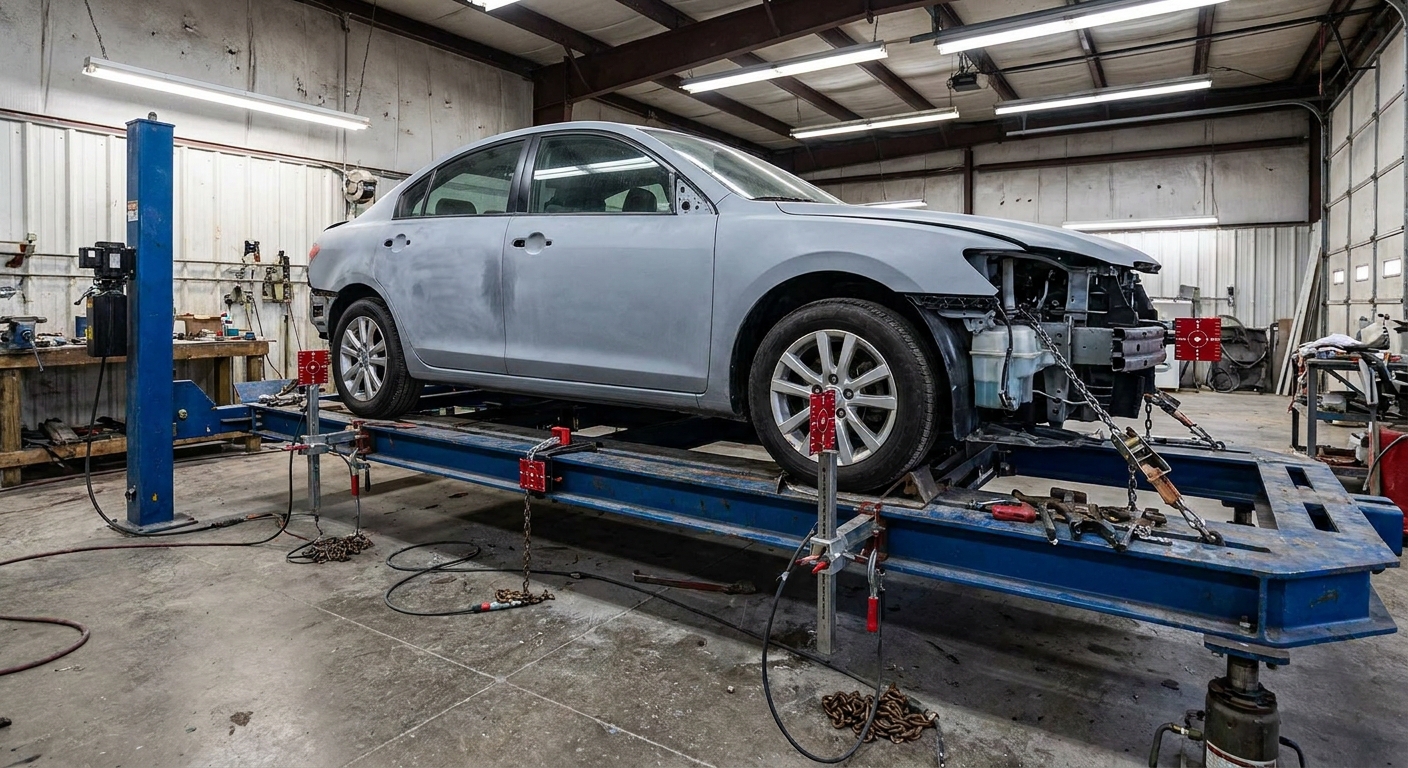
Frame or structural damage sounds like a death sentence for a car, but in most cases it can be repaired safely, if it is done correctly by a shop with the right equipment. The real question is not just “can it be fixed,” but “can it be restored to the manufacturer’s specifications.” Here is what frame damage actually is, how it is repaired, and when a car is truly beyond saving.
What is frame or structural damage?
It is damage to the parts of the vehicle that give it strength and hold everything in alignment. On older vehicles that means the steel frame; on most modern cars it means the unibody, where the body panels and structure are one welded unit with engineered crumple zones. Damage here can affect how the car drives, how it protects you in a crash, and whether panels and doors line up.
How do shops know if the frame is damaged?
A shop uses computerized measuring systems to compare your car’s dimensions against the manufacturer’s specifications, point by point. Signs that prompt a measurement include uneven panel gaps, doors or the trunk not closing right, the car pulling or “crabbing” when driving, and visible buckling. Measurement, not a guess, is what confirms structural damage and guides the repair.
Can frame damage be repaired safely?
Often yes. Using a frame machine and anchoring system, technicians pull the structure back to factory specifications and re-measure to confirm. Modern unibody repair also involves sectioning or replacing structural components at factory-designated points and welding to manufacturer standards. Done to spec, the repair restores the car’s strength and crash protection.
| Damage | Typical outcome |
|---|---|
| Minor misalignment | Measured and pulled back to spec |
| Damaged structural section | Section replaced/welded to manufacturer spec |
| Crumple zone deployed in a crash | Repair or replace the engineered components |
| Severe, multi-area structural damage | May be declared a total loss |
When is a car beyond repair?
A car is usually totaled when the cost to restore the structure to spec, plus other repairs, meets or exceeds its value, or when the damage is so extensive that safe restoration is not realistic. That is an economic and safety judgment, not just a visual one, which is why an accurate measurement and estimate matter so much.
Why proper structural repair is non-negotiable
The structure is your safety system. If it is not restored to specification, crumple zones may not absorb energy correctly and airbags and restraints may not perform as designed in a future crash. That is why structural repair should be done with proper equipment, manufacturer procedures, and post-repair measurement, not shortcuts.
What to look for in a shop
- Computerized frame/unibody measuring equipment.
- Welding and technicians trained to manufacturer standards.
- Pre- and post-repair measurements you can see.
- Willingness to follow OEM repair procedures and document them.
Frequently asked questions
Is a car with repaired frame damage safe to drive?
Yes, if it was restored to manufacturer specifications and verified by measurement. Proper repair is what makes it safe.
Does frame damage always total a car?
No. Many structural repairs are routine; a car is totaled only when restoring it costs more than it is worth or cannot be done safely.
Will frame damage show up later?
A correctly measured and repaired structure should drive normally; lingering pull or panel-gap issues suggest the repair was not completed to spec.
The bottom line
Structural damage is usually repairable when a shop measures to factory specs, uses proper equipment, and follows manufacturer procedures. The priority is restoring the car’s engineered strength and crash protection, not just its looks. Choose a Los Angeles shop that measures, documents, and repairs to spec, and your car can be both safe and right again.
0 Comments