

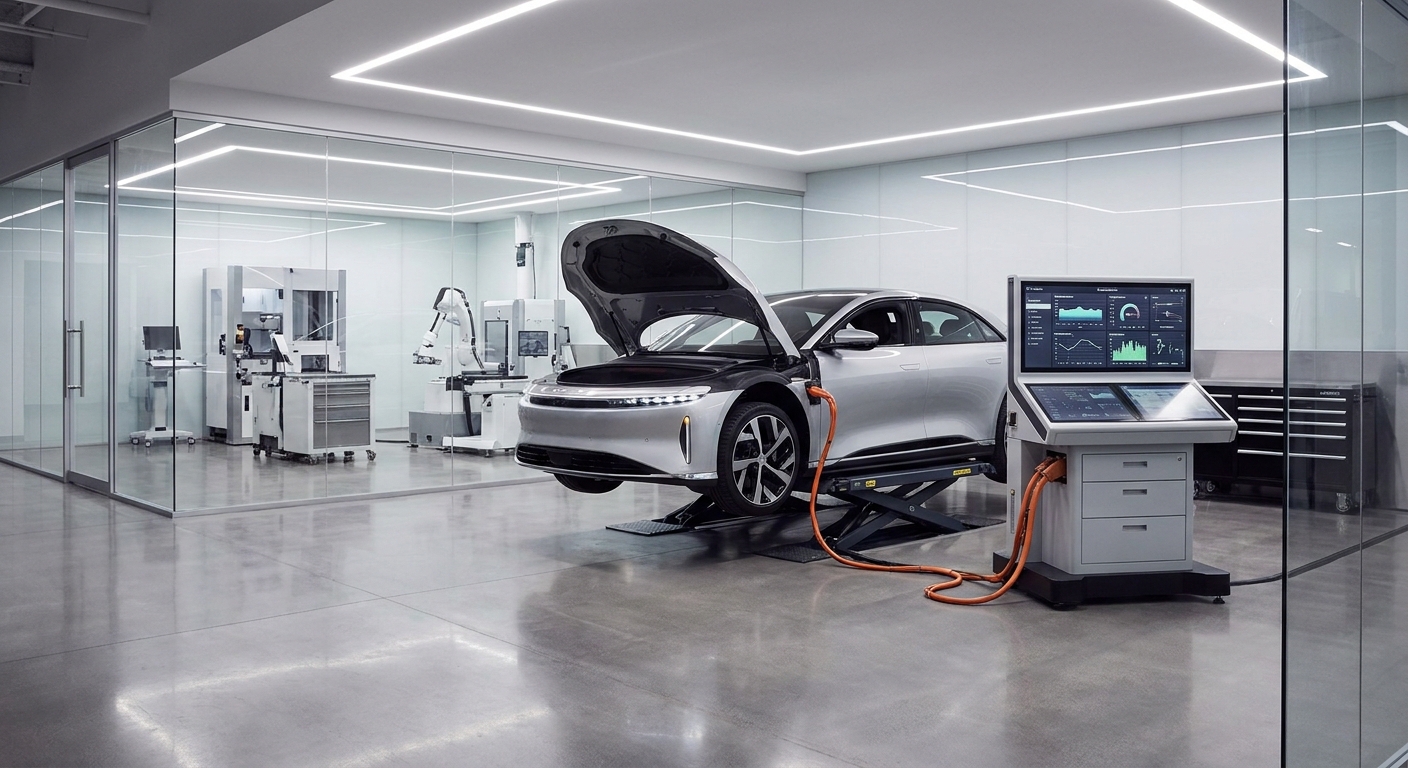
Repairing an electric vehicle after a collision is not the same as fixing a gas car, and that difference is why certification matters so much. Between high-voltage batteries, aluminum and mixed-material bodies, and dense driver-assistance sensors, EV and Tesla collision repair demands specific training, equipment, and procedures. Here is what actually makes it different and what to look for in a shop.
Why is EV collision repair different?
Three things set EVs apart. First, a high-voltage battery and electrical system that must be safely de-energized and inspected. Second, bodies that often use aluminum, high-strength steel, and structural castings that require specialized tools and welding. Third, a heavy reliance on cameras and radar (ADAS) that must be recalibrated after the work. A shop that treats an EV like a regular car can miss all three.
High-voltage safety comes first
Before bodywork begins, technicians follow manufacturer procedures to safely handle the high-voltage system and inspect the battery, especially after an impact near the pack. A damaged battery can pose fire or shock risks, so proper diagnosis and handling are non-negotiable. This is the single biggest reason EV repair requires trained technicians, not just experience with sheet metal.
Materials and structure
| Feature | Why it matters |
|---|---|
| Aluminum / mixed materials | Need dedicated tools, clean areas, and specific welding/bonding |
| Structural castings | Repair vs replace decisions follow strict OEM rules |
| Battery pack location | Floor-mounted packs affect structural repair planning |
| ADAS sensors | Require recalibration after many repairs |
Why certification matters
Manufacturers like Tesla and other EV makers certify shops that have the required training, tools, and sometimes access to OEM parts and procedures. Certification is a strong signal the shop can repair the vehicle to specification and safely handle the battery and structure. For a Tesla or other EV, choosing a certified or properly equipped shop is the most important decision you will make.
What this means for cost and time
EV repairs can take longer and cost more than comparable gas-car repairs because of battery diagnostics, specialized materials, OEM parts, and required calibrations. That is not padding, it reflects the extra steps a safe, correct EV repair involves. A shop that quotes a suspiciously fast, cheap EV repair may be skipping required procedures.
What to look for in an EV repair shop
- Manufacturer certification or documented EV training and equipment.
- Safe high-voltage handling and battery inspection procedures.
- Aluminum/mixed-material capability with proper tooling.
- In-house or partnered ADAS calibration.
- Access to OEM parts and repair procedures.
Frequently asked questions
Can any body shop repair a Tesla or EV?
Technically some will try, but EVs need specific training, tools, and battery-safety procedures; a certified or properly equipped shop is strongly recommended.
Is the battery always damaged in a crash?
No, but it must be inspected after any significant impact near the pack before the car is considered safe.
Why is my EV repair more expensive?
Battery diagnostics, specialized materials, OEM parts, and required ADAS calibration add legitimate cost and time.
The bottom line
EV and Tesla collision repair is a specialized discipline: high-voltage safety, advanced materials, and sensor calibration all have to be handled to manufacturer specification. Choose a certified or properly equipped Los Angeles shop, and expect the repair to take the time a safe, correct job requires. With the right shop, your EV can be restored fully, structurally, electrically, and electronically.
0 Comments