

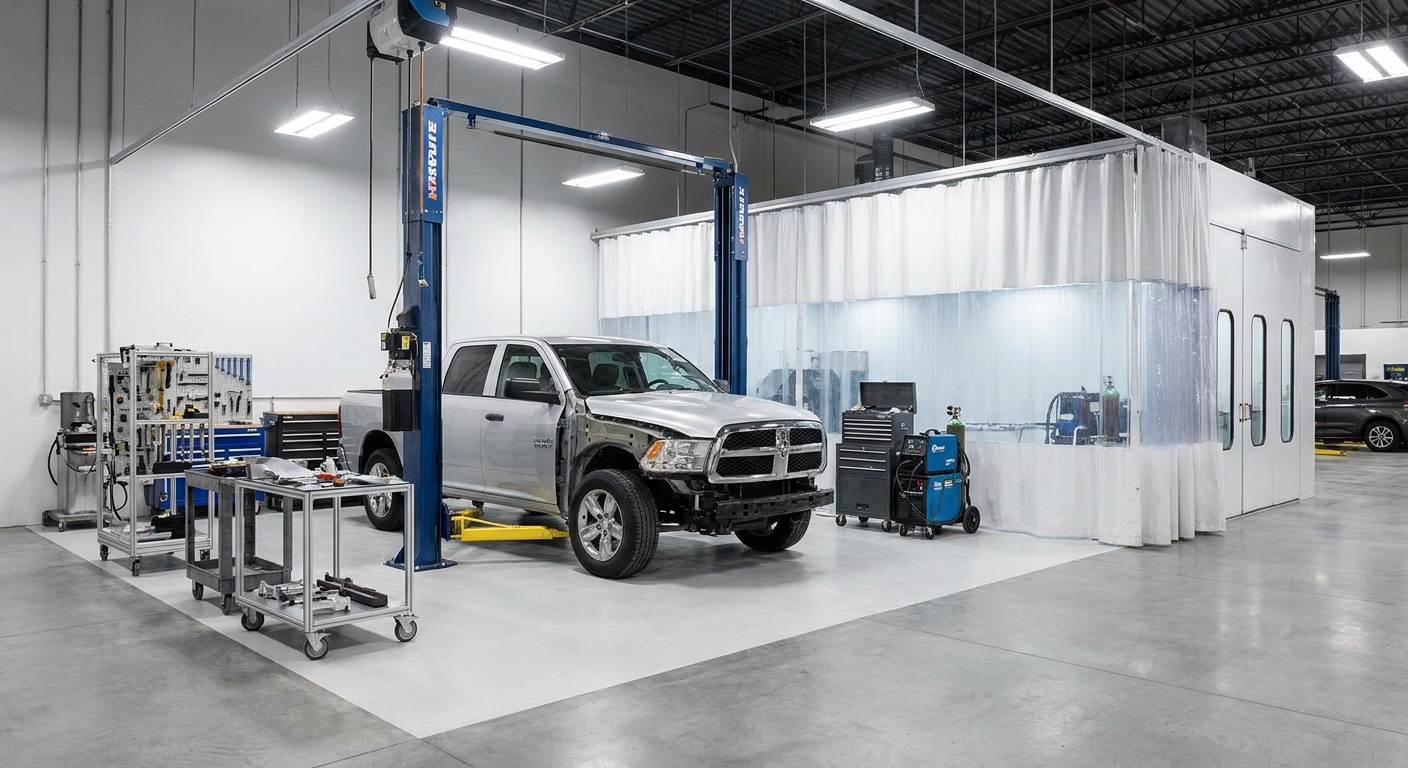
Aluminum-body vehicles like the Ford F-150 and many luxury cars need a fundamentally different repair process than steel cars, and a shop that is not set up for aluminum can do more harm than good. Aluminum body repair requires dedicated tools, an isolated work area, and specific training. Here is why it is different and what to look for if your aluminum vehicle is damaged.
Why is aluminum repair different from steel?
Aluminum behaves differently than steel: it cannot be heated and reshaped the same way, it requires different welding and riveting/bonding techniques, and its dust and particles must be kept separate from steel work. Cross-contamination between steel and aluminum can cause galvanic corrosion, so manufacturers require aluminum repairs to be done in a dedicated, isolated area with their own tools.
What a proper aluminum repair setup looks like
| Requirement | Why it matters |
|---|---|
| Isolated/clean aluminum room | Prevents steel-aluminum cross-contamination and corrosion |
| Dedicated tools | Separate tools avoid transferring steel particles |
| Aluminum welding / riveting / bonding | Aluminum joins differently than steel |
| Manufacturer certification & training | OEM procedures and structural know-how |
| Dust extraction | Aluminum dust requires special handling |
Why certification matters so much here
Manufacturers certify shops for aluminum repair because the equipment and training requirements are significant. For an F-150 or an aluminum-intensive luxury vehicle, a certified shop has demonstrated it has the isolated bay, the right tools, and technicians trained in aluminum structural repair. Using a non-certified shop risks improper joins, corrosion, and a structure that will not perform as designed.
How aluminum repair affects cost and time
Aluminum repairs often cost more and take longer than comparable steel repairs because of specialized labor, equipment, parts, and the extra care to avoid contamination. As with structural and EV work, that reflects the real requirements of doing it correctly, not padding. A suspiciously cheap, fast aluminum quote may mean the shop is not following manufacturer procedures.
What to ask before you commit
- Are you certified or specifically equipped to repair my aluminum vehicle?
- Do you have a dedicated aluminum repair area and tools?
- Will you follow the manufacturer’s repair procedures?
- How will structural sections be joined, welded, riveted, or bonded to spec?
Why it matters for safety and value
Aluminum structures are engineered for strength and crash performance just like steel. A repair that ignores aluminum requirements can compromise corrosion resistance and structural integrity, and it can hurt resale value. Proper aluminum repair restores the vehicle to manufacturer specification so it looks right, resists corrosion, and protects you as designed.
Frequently asked questions
Can any body shop repair an aluminum F-150?
Not safely. Aluminum requires a dedicated area, specific tools, and training; look for a certified or properly equipped shop.
Why is aluminum repair more expensive?
Specialized equipment, isolated work areas, OEM procedures, and trained labor add legitimate cost and time.
What happens if aluminum is repaired like steel?
You risk corrosion from cross-contamination and improper joins that weaken the structure.
The bottom line
Aluminum-body vehicles demand a dedicated, certified repair process, isolated work area, dedicated tools, and aluminum-specific joining done to manufacturer spec. For an F-150 or aluminum-intensive luxury car, choose a Los Angeles shop equipped and certified for aluminum, and expect the job to take the time a correct, corrosion-safe repair requires.

0 Comments