

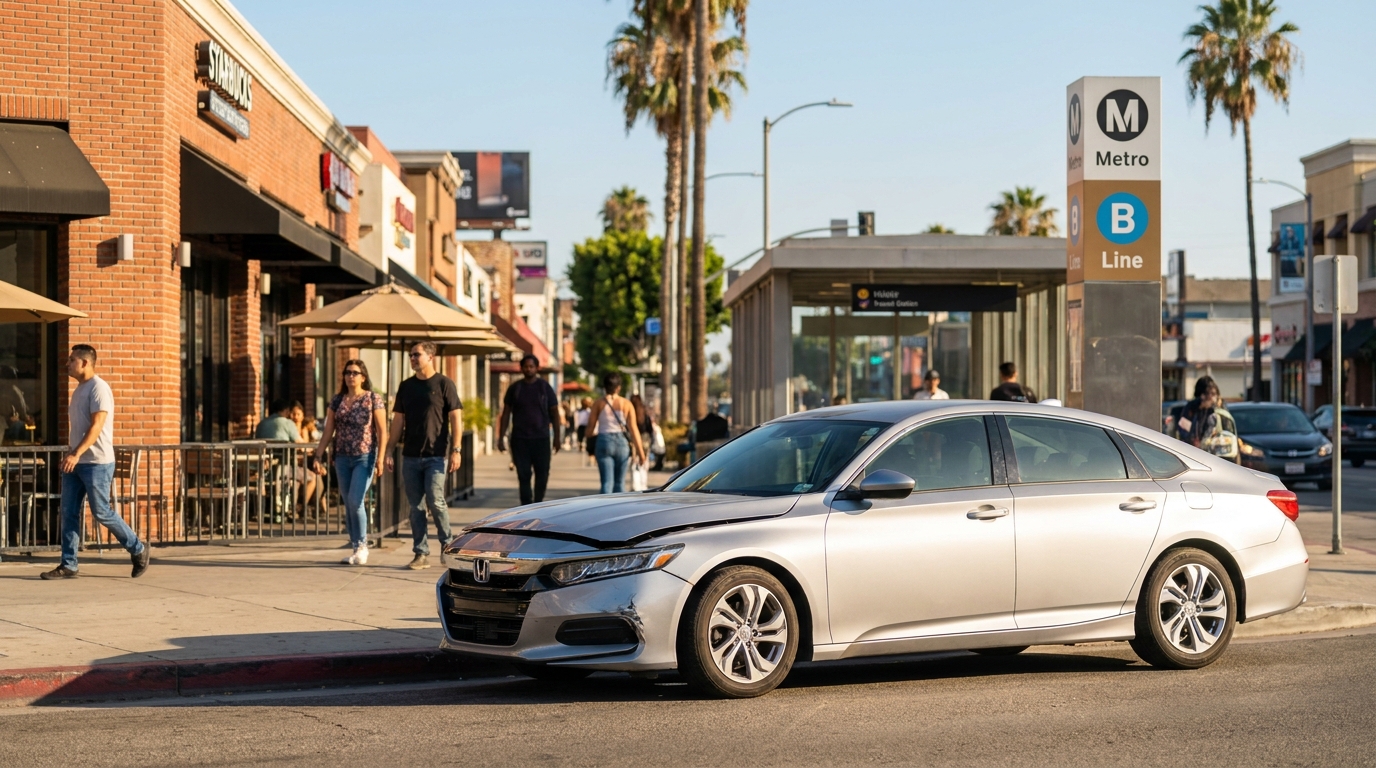
What Does an Auto Body Shop in North Hollywood Actually Fix?
An auto body shop in North Hollywood handles any damage to a vehicle’s exterior structure and finish, bumpers, panels, frames, paint, and the safety systems tied to them. Whether you caught a sideswipe on Lankershim, got rear-ended at the 170/101 merge, or came back to a parked-car hit in the NoHo Arts District, the repair path is the same: damage assessment, written estimate, parts procurement, structural and cosmetic repair, paint, and safety-system recalibration.
Where Do North Hollywood Crashes Actually Happen?
NoHo’s geography stacks multiple collision risks into a small footprint. Knowing the hotspots helps you understand what type of damage you’re likely dealing with.
- The 170/101 “Hollywood Split”: The junction of US-101, SR-134, and SR-170 compresses heavy commuter volume into short merge distances, producing a steady stream of rear-end and sideswipe crashes. The SR-170 corridor runs alongside the North Hollywood Metro station, so freeway traffic regularly mixes with transit activity.
- Lankershim Boulevard (NoHo Arts District): Dense foot, bike, and rideshare traffic along Lankershim raises the rate of pedestrian encounters, dooring incidents, and low-speed vehicle impacts. This is the neighborhood’s top source of bumper and door-panel damage.
- Magnolia and Victory Boulevards: High-volume surface streets that connect NoHo to the broader Valley. Multi-lane speed differentials and frequent signal stops create conditions for front and rear impacts.
- Parked-car hits and hit-and-runs: NoHo’s dense residential parking means parked-vehicle strikes are routine. Local news has documented incidents where up to 10–12 vehicles were damaged in a single hit-and-run event, a scenario that ties directly to uninsured-motorist claims.
If your collision happened in any of these corridors, you can read the full coverage and claims walkthrough in our guide on what to do when someone hits your parked car and leaves in Los Angeles.
What Does Collision Repair Cost in North Hollywood?
Repair costs depend on the damage type, vehicle make, and whether any safety sensors are integrated into the affected panels. The table below reflects realistic Valley-area ranges for the most common NoHo repair scenarios.
| Damage Type | Typical Repair Range | Notes |
|---|---|---|
| Bumper scuff / paint transfer | $150 – $400 | Often same-day; no structural work needed |
| Cracked bumper with refinish | $300 – $600 | Repair vs. replace decision depends on crack depth |
| Bumper replacement (with sensors) | $800 – $2,000+ | Add ADAS recalibration cost if camera/radar mounted |
| Rear-end: bumper + minor structural | $1,000 – $5,000 | Trunk alignment, absorber, and seal checks required |
| Sideswipe (door + quarter panel) | $1,500 – $4,000 | Paint blending adds cost; see our sideswipe repair cost breakdown |
| Frame / structural damage | $1,500 – $6,000+ | Requires computerized measuring; may trigger total-loss review |
These are starting-point ranges. LA’s labor rates and the complexity of modern ADAS-equipped vehicles mean estimates at the lower end apply to older, simpler cars. For a model-specific breakdown of rear-end damage costs, see our rear-end collision repair cost guide.
How Do You Choose a Body Shop in North Hollywood?
The right shop protects your car’s safety and your out-of-pocket costs. Use this checklist before authorizing any repairs.
- Verify I-CAR and ASE credentials. I-CAR Gold Class and ASE certifications are the two most recognized industry standards. They signal that technicians complete ongoing training on current repair procedures.
- Check for OEM certification on your brand. If you drive a Honda, BMW, Tesla, or other brand with factory repair protocols, choose a shop certified by that manufacturer. Our guide to finding an OEM certified collision center in Los Angeles explains how to verify this quickly.
- Ask for a written, line-item estimate. Any reputable shop provides this before work begins. Verbal quotes are not binding.
- Confirm ADAS recalibration capability. If your vehicle has front cameras, radar, or parking sensors in the affected area, recalibration is mandatory after repair. A forward camera misaligned by as little as 0.6 degrees can significantly reduce automatic emergency braking reaction time, making this a safety-critical step, not an upsell.
- Know your California right to choose. California law gives you the right to select any licensed body shop you want. Your insurer cannot legally require you to use a Preferred/DRP shop. DRP agreements can favor cost savings for the insurer, which sometimes means aftermarket parts or compressed repair procedures.
- Look for a written repair warranty. A shop confident in its work backs it with a guarantee on parts and labor.
DRP Shop vs. Independent Shop: How Do They Compare?
Insurer Direct Repair Program (DRP) shops are convenient, but “preferred” does not always mean “best for you.” Here is what the difference looks like in practice.
| Factor | DRP / Insurer-Preferred Shop | Independent Certified Shop |
|---|---|---|
| Who it serves first | Insurer (cost efficiency) | Vehicle owner |
| Parts used | Often aftermarket or reconditioned | OEM or owner-specified |
| Repair procedures | May be condensed to hit cost targets | Follow OEM repair standards |
| ADAS recalibration | Varies; not always included | Should be standard at a certified shop |
| Your legal right (California) | You can refuse and go elsewhere | Your choice; insurer must still pay the claim |
| Warranty | Insurer may back it; shop terms vary | Shop-issued, typically broader |
How Does the Insurance Claim Work After a NoHo Collision?
The process is the same whether you’re filing against your own policy or the other driver’s. Here is the sequence most North Hollywood drivers go through.
- Document the scene. Photograph all vehicles, road positions, street signs, and any rideshare trip screens if applicable. Note the location precisely, “southbound 170 near Oxnard” matters for police reports.
- File the claim promptly. California requires insurers to acknowledge a claim within 15 days and accept or deny it within 40 days of receiving proof of loss.
- Get your own estimate. Do not let the insurer’s appraiser be your only source. A shop estimate gives you a benchmark and surfaces hidden damage the desk adjuster may miss.
- Choose your shop. Exercise your California right. Direct the insurer to issue payment to you and your chosen shop, not a DRP facility you didn’t select.
- Supplement if hidden damage appears. Once panels come off, additional damage is common, especially after rear-end hits. A reputable shop files a supplement directly with the insurer rather than billing you for the difference.
- Confirm recalibration is on the repair order. If any camera, sensor, or radar sits behind a repaired panel, verify that recalibration is explicitly listed before you pick up your car.
Common Mistakes to Avoid
- Accepting aftermarket parts without checking your policy. Some California policies entitle you to OEM parts, especially on newer vehicles. Ask before authorizing anything.
- Skipping ADAS recalibration to save money. This is a safety issue, not a cosmetic one. A misaligned camera can compromise automatic emergency braking and lane-keeping systems.
- Using a shop before checking for brand certification. For Tesla, BMW, Mercedes, and similar vehicles, uncertified shops may void factory warranties or use incorrect repair procedures.
- Paying out-of-pocket for a hit-and-run without checking UM coverage. Uninsured motorist property damage coverage often applies to parked-car hit-and-runs in California, even if you never find the other driver.
- Releasing the car before a test drive and visual inspection. Walk around the car in daylight. Check panel gaps, paint color match, and any driver-assist warnings on the dash before signing the release.
- Ignoring diminished value. A properly documented repair still reduces your car’s market value. California allows you to pursue a diminished-value claim against the at-fault driver’s insurer.
Frequently Asked Questions
How long does collision repair take at a North Hollywood body shop?
Minor bumper repairs typically finish in one to two days. More involved repairs, panel replacement, frame work, or paint, run five to ten business days. Parts availability is the most common delay in the current market, especially for late-model vehicles with proprietary components.
Can I choose any body shop in North Hollywood even if my insurer recommends another?
Yes. California law gives you the unconditional right to select the licensed repair shop of your choice. Your insurer cannot deny your claim or penalize you for refusing their preferred shop. They must pay the reasonable cost of repair regardless of which shop you use.
Does bumper repair always require ADAS recalibration?
Not always, but often. If your bumper houses a radar unit, front camera, or parking sensors, any removal and reinstallation of those components triggers a mandatory recalibration. A shop that skips this step is leaving your safety systems in an unknown state.
What if my car was hit while parked on Lankershim and the driver left?
File a police report immediately and document all damage with photos. Then check your policy for uninsured motorist property damage (UMPD) coverage. In California, UMPD can cover parked-car hit-and-run damage subject to your deductible, even without identifying the other driver.
How do I know if my repair estimate is fair?
Compare at least two written estimates. Look for line-item labor hours, OEM versus aftermarket part designations, and whether ADAS recalibration appears on the order. An estimate missing any of these items is incomplete. Our full guide on rear-end collision repair costs in Los Angeles walks through a typical estimate line by line.
0 Comments