

What Does Bird Dropping and Tree Sap Paint Etching Repair in Los Angeles Actually Cost?
If you’re dealing with bird dropping or tree sap paint etching repair in Los Angeles, the cost depends entirely on how deep the damage has gone: a shallow topical stain can be polished out for $250–$450, while a panel that needs a full respray runs $1,000–$1,700 at a quality LA shop. The sections below tell you which category your car falls into, and how to confirm it before spending a dollar.
Why Is LA Especially Hard on Car Paint?
Los Angeles concentrates every factor that accelerates paint etching. Summer air temperatures regularly exceed 90°F, and a black or dark-colored roof panel sitting in direct sun can surface-heat well beyond that. Bird uric acid can begin etching clear coat within 30–60 minutes in that kind of heat. Tree sap hardens into resin faster under UV exposure, and once hardened it bonds to the clear coat like glue.
LA street-parking geography makes the problem worse. Jacaranda trees drop sticky purple blossoms in spring. Ficus trees along Wilshire, Beverly, and similar corridors drip sap year-round. Coastal neighborhoods from Santa Monica to El Segundo deal with marine-layer dew that re-hydrates bird acid overnight, giving it a second window to etch. If your car parks under any of these regularly, the question is not whether you will see etching, it is when.
How Do You Know Which Repair Your Car Needs?
There are three severity grades. Identifying yours takes about two minutes with a shop light and a fingernail.
Grade 1: Topical Stain
The paint surface looks dull or discolored where the dropping or sap sat, but running a fingernail across it feels smooth. The etch is in the top layer of clear coat only. A body shop can remove this with a clear-coat-safe compound and a machine polisher. No paint is needed.
Grade 2: Clear-Coat Etch
You can feel a slight depression or rough texture. The clear coat has been eaten through in that spot but the color (base coat) underneath is intact. A shop will wet-sand the panel, then polish and buff. If only one panel is affected, this stays sub-$600 at most LA shops. If wet-sanding removes too much clear, the panel moves to Grade 3.
Grade 3: Through-the-Clear or Fractured Etch
The surface shows tiny cracks or wrinkles radiating from the stain center, or the spot looks chalky white even after the contaminant is cleaned off. This means the etch has fractured the clear coat all the way through. Sanding will not remove the cracks, it will only expose more of them and risk burning into the base coat. The panel must be repainted. Multi-panel jobs, especially when color blending is needed for metallic or pearl finishes, can reach the low thousands.
How Does a Shop Test Etch Depth?
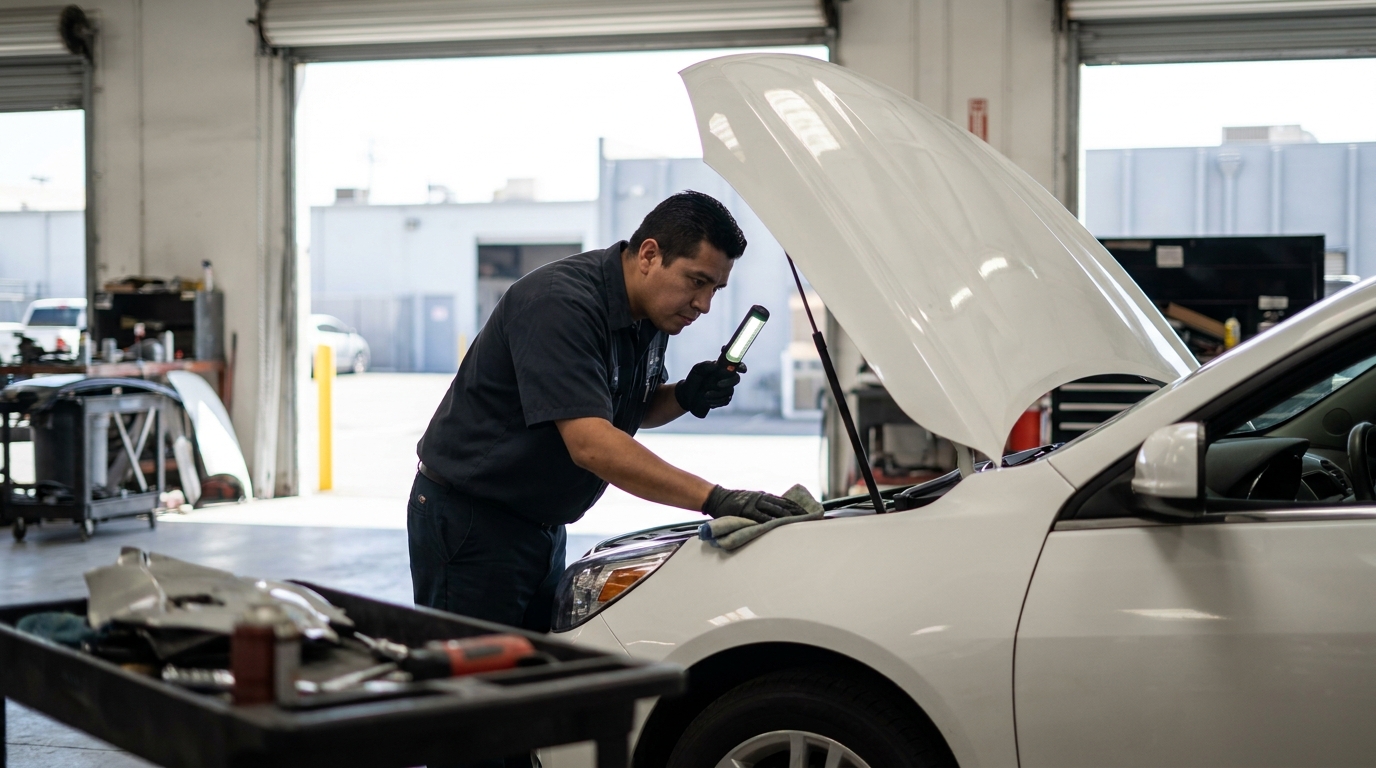
A reputable body shop uses a paint-thickness gauge on the affected panel and compares the reading to an undamaged panel on the same car. Normal factory clear coat runs 40–80 microns. If the reading on the etched spot is already thin, there is not enough clear coat left to wet-sand safely. The shop will also use a focused light at a low angle to see whether the texture is topical (smooth under light) or fractured (tiny lines visible). Both tests together tell the technician, in about five minutes, whether the car needs polishing or paint.
LA Cost Breakdown by Severity
| Severity Grade | Repair Method | Typical LA Cost Range |
|---|---|---|
| Grade 1, Topical stain | Machine polish / paint correction | $250–$450 |
| Grade 2, Clear-coat etch | Wet-sand + polish (1–2 panels) | $400–$700 |
| Grade 3, Fractured / through-clear | Single-panel repaint | $1,000–$1,700 |
| Grade 3, Multiple panels with blending | Repaint + adjacent-panel blend | $1,500–$3,000+ |
LA labor rates at quality shops run $100–$150 per hour. A budget shop charging $60–$80 per hour may cut prep time, which directly affects how well the repainted panel matches and holds up long-term. For luxury vehicles, EVs, or cars with complex pearl and tri-coat finishes, always confirm the shop has experience with your specific color code, poor blending on a metallic shows in sunlight immediately. For Tesla owners in particular, the paint systems require shop-specific knowledge; see our guide to Tesla bumper repair in Los Angeles for how that affects panel-level paint jobs.
Paint Correction vs. Panel Repaint: Which Does Your Car Actually Need?
| Factor | Paint Correction | Panel Repaint |
|---|---|---|
| Etch depth | Topical or shallow clear-coat only | Fractured / through-the-clear |
| Feel under fingernail | Smooth | Rough, pitted, or cracked |
| Clear-coat thickness remaining | Enough to sand (gauge test) | Too thin to sand safely |
| Color complexity | Any color | Metallic/pearl adds blend cost |
| Typical turnaround | Same day to 1 day | 3–5 business days |
| Cost range (LA) | $250–$700 | $1,000–$3,000+ |
Is Bird or Sap Etching Covered by Insurance?
Contaminant paint etching is considered environmental damage, which falls under comprehensive coverage, not collision. In practice, most drivers should not file a claim for a single-panel etch. California’s average comprehensive deductible is $500, and a Grade 1 or Grade 2 repair often costs less than that. Filing a claim for cosmetic paint damage also appears on your insurance record and can affect your premium at renewal. Pay out of pocket for single-panel repairs and reserve comprehensive for major hail events or vandalism affecting multiple panels. If you are unsure how to evaluate that trade-off, our breakdown of keyed car repair costs and the insurance claim decision in Los Angeles walks through the same cost-vs-deductible math.
Common Mistakes to Avoid
- Waiting to clean it off. Every hour in LA heat compounds the damage. A dropping that could have been wiped away in minutes etches the clear coat within 30–60 minutes on a hot surface.
- DIY wet-sanding without a gauge. If you sand through the clear coat into the base coat, the panel must be repainted, a mistake that turns a $400 correction into a $1,200 repaint.
- Using isopropyl alcohol at full concentration directly on the etch. It can temporarily cloud the area and make depth assessment harder. Dilute to 10–15% for a safe spot test.
- Assuming any body shop can match your color. Tri-coat whites, pearl silvers, and special-order colors require spray-out cards and panel-blend experience. Ask before you authorize.
- Filing a comprehensive claim for a sub-deductible repair. A single etched panel rarely justifies the claim. Run the numbers first.
- Confusing etching with UV clear-coat failure. If the dull area is large and appears in full sheets rather than small spots, that is likely UV delamination, a separate, more expensive issue, not contaminant etching.
How Can You Prevent This Damage Going Forward?
The most effective prevention is a sacrificial protective layer between the contaminant and your clear coat. A quality wax buys you a few hours of buffer time. A paint sealant extends that to several weeks. A ceramic coating bonds to the clear coat and gives you a harder, more chemically resistant surface that can absorb acid and sap contact long enough for you to wash it off safely. For panels most exposed to tree canopy (hoods, roofs, trunk lids), paint protection film (PPF) provides a physical barrier that contaminants cannot penetrate at all. If your car already has paint etching from a previous incident alongside other cosmetic damage, our guide to sun-damaged and peeling clear coat repair in Los Angeles explains how shops address combined UV and contaminant damage in a single repaint pass.
Frequently Asked Questions
How fast does bird poop damage car paint in Los Angeles?
In direct LA sun with surface temperatures above 120°F, uric acid in bird droppings can begin etching the clear coat within 30–60 minutes. Shaded or cooler surfaces give you a few hours. The safest rule is to remove it as soon as you notice it, using a damp microfiber cloth and light pressure, no rubbing dry.
Can tree sap always be polished out, or does it need a repaint?
Fresh sap removed within a day or two usually comes off cleanly. Sap that has hardened and sat for a week or more in LA heat will have etched into the clear coat. Once you can feel a depression or see discoloration after the sap is removed, the panel typically needs wet-sanding at minimum. If the clear coat is fractured, only a repaint will fix it.
Why does blending into adjacent panels add cost?
Color-matched paint sprayed on one panel in isolation rarely matches perfectly in sunlight, especially on metallic, pearl, or tri-coat finishes. A shop blends the fresh paint into the edge of the neighboring panel to create a gradual transition. Each additional panel blended adds roughly $200–$400 in labor and materials in LA.
Is contaminant paint etching covered by car insurance?
Yes, under comprehensive, but it rarely makes financial sense to file. Most comprehensive deductibles are $500 or more, and Grade 1 or Grade 2 etching repairs often cost less than that. Filing also creates a claim record. Reserve the comprehensive claim for larger multi-panel environmental damage events.
How do I tell bird or sap etching apart from UV clear-coat failure?
Contaminant etching appears as small discrete spots or circles, matching the footprint of the dropping or sap blob. UV clear-coat failure shows as large cloudy sheets, peeling, or flaking that spreads across an entire panel and has no spot pattern. The repairs are different: etching is polished or repainted at panel level; UV failure typically requires a full panel or multi-panel respray.
0 Comments