

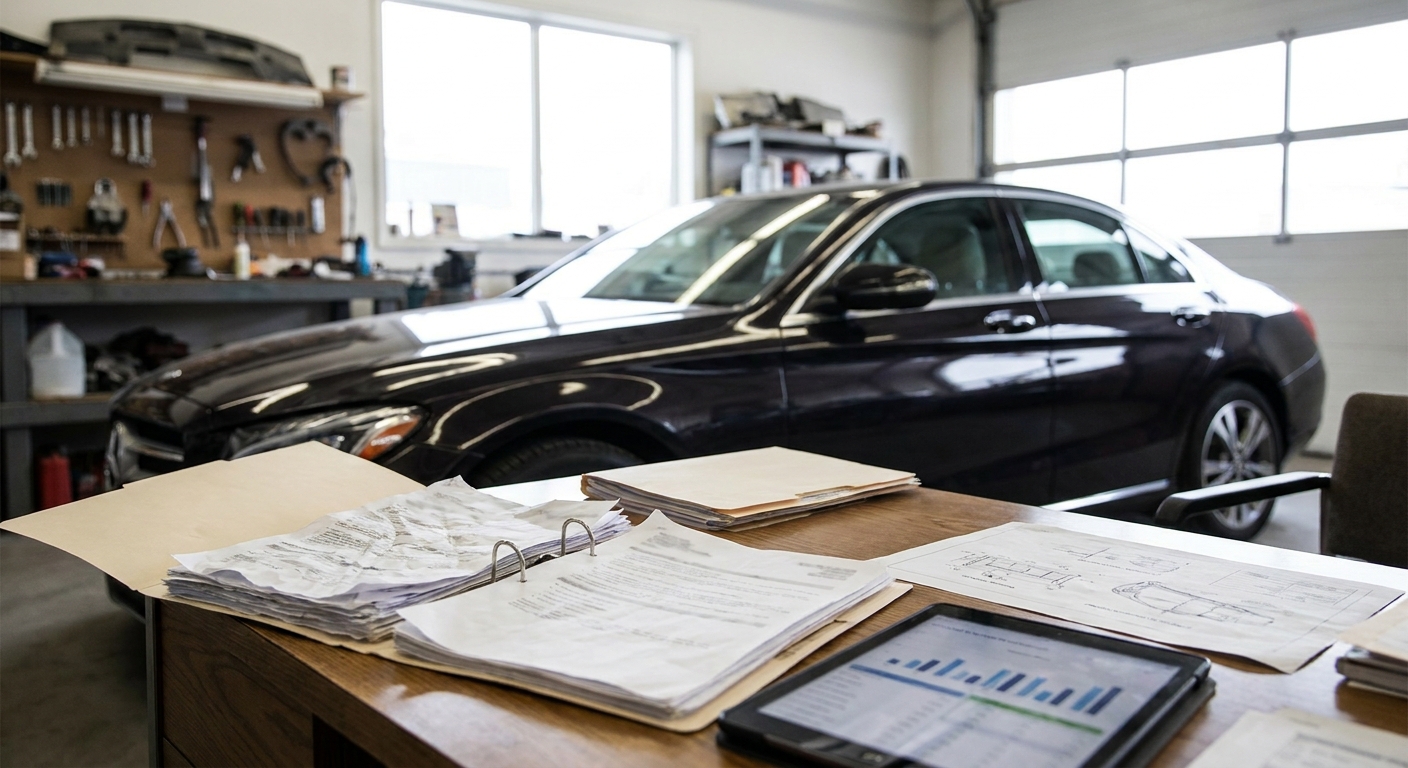
Even after a flawless repair, a car that has been in an accident is usually worth less than one that has not, that gap is “diminished value,” and in California you may be able to recover it from the at-fault party. While a diminished value claim is something you pursue with the insurer (or an attorney), a quality body shop plays a quiet but important role: the documentation it produces can make or break your claim. Here is how that works.
What is diminished value?
Diminished value is the loss in a vehicle’s market value simply because it now has an accident on its record, even when repaired correctly. A buyer or dealer will typically pay less for a car with accident history than for an identical one without it. In California, if another driver was at fault, you can generally seek diminished value from their insurer in addition to the repair itself.
Who can claim it in California?
Generally, the not-at-fault party can pursue a third-party diminished value claim against the at-fault driver’s insurer, within the state’s statute of limitations for property damage. It is a separate recovery from the repair cost. Your own insurer typically does not owe first-party diminished value unless your policy says otherwise.
How a body shop’s documentation supports your claim
A diminished value claim is an evidence game, and the repair file is core evidence. A thorough shop can provide:
| Document | Why it helps |
|---|---|
| Detailed repair order | Shows the full extent of damage and repairs |
| Pre/post photos | Documents severity and quality of the repair |
| Parts list (OEM vs aftermarket) | Affects how value is judged |
| Structural/calibration records | Proves proper repair, and that structural damage occurred |
This paper trail substantiates that the car had real, documented damage, which is the foundation of a diminished value figure.
How is diminished value calculated?
Insurers often start with a formula (commonly referenced as the “17c” method), but that approach is frequently criticized for undervaluing the loss. A more accurate figure usually comes from an independent appraiser comparing your car’s value with and without the accident history. The shop’s documentation feeds whichever method is used, and supports a higher, evidence-based number.
Practical steps to protect a claim
- Keep every repair document, estimate, supplement, photos, parts list, and calibration records.
- Ask your shop for a complete copy of the repair file.
- Consider an independent diminished value appraisal rather than accepting a formula figure.
- Act within California’s property-damage claim deadline.
Where a body shop’s role ends
To be clear: the shop repairs the car and documents the work, it does not file or negotiate your diminished value claim, and this article is general information, not legal or financial advice. For the claim itself, you deal with the insurer or consult a professional. What the shop gives you is the evidence that makes the claim credible.
Frequently asked questions
Can I get diminished value if the repair was perfect?
Yes, diminished value reflects the accident history itself, not repair quality; a perfect repair can still leave a value gap.
Does my own insurance pay diminished value?
Usually no; it is typically pursued against the at-fault driver’s insurer in California.
What documents do I need?
The full repair file, order, photos, parts list, and calibration records, plus ideally an independent appraisal.
The bottom line
Diminished value is a real, recoverable loss in California when someone else was at fault, and your repair documentation is the evidence that supports it. Choose a Los Angeles shop that documents the damage and repair thoroughly and gives you the full file, then pursue the claim with that evidence in hand.
0 Comments