

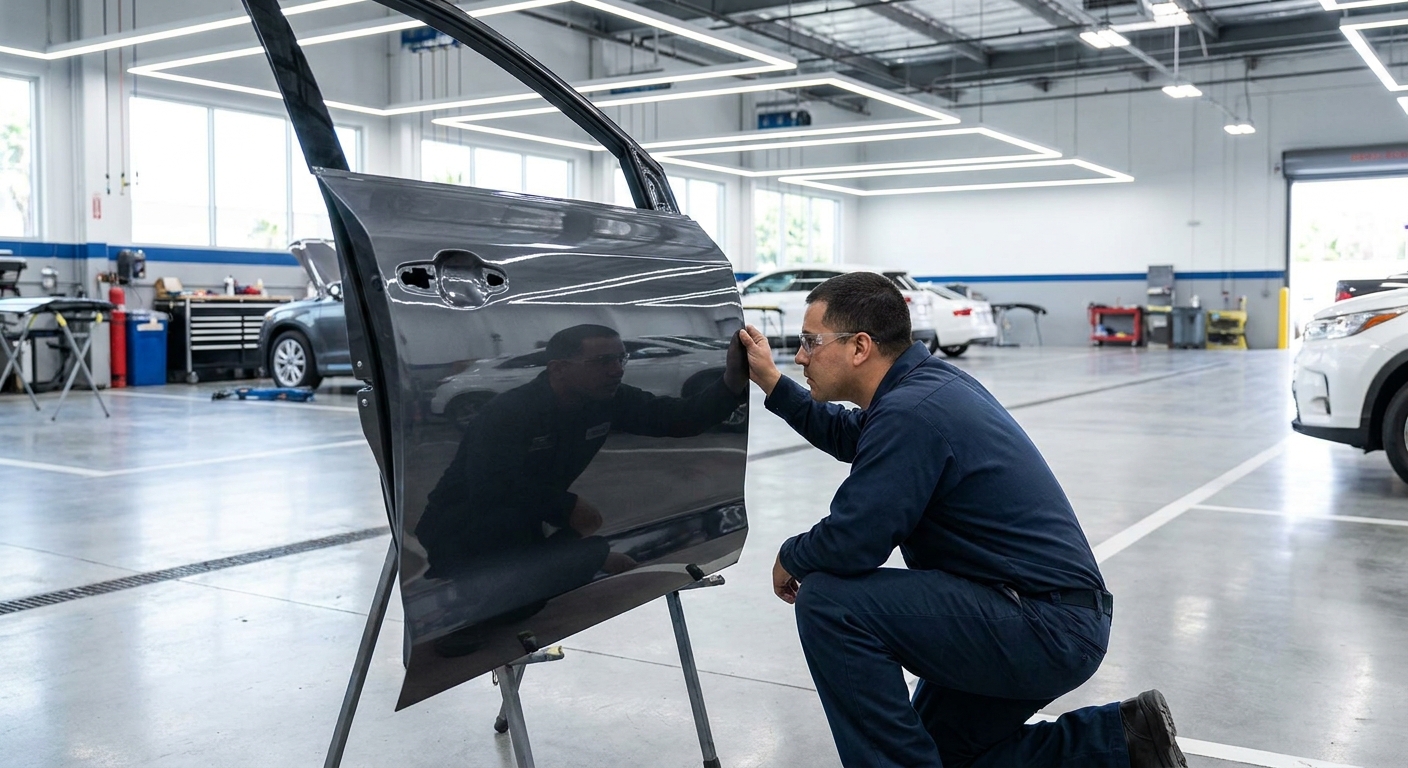
No. In California you are never required to use your insurance company’s preferred body shop. State law lets you choose any licensed collision repair facility you trust, and your insurer must process the claim either way. Below is exactly what the law says, why insurers steer you toward their own network, and how to choose the right shop in Los Angeles without losing any coverage you are owed.
What does California law actually say?
California Insurance Code Section 758.5 is the key rule. It prohibits an insurer from requiring that your vehicle be repaired at a specific shop. An insurer may recommend a shop, but only if you ask for a referral or after it clearly tells you that you have the right to choose your own facility. The choice is yours, not the adjuster’s.
- Freedom of choice. You can take your car to any licensed body shop in California, including one outside the insurer’s network.
- No penalty. Your insurer cannot reduce your claim, delay it, or void coverage because you picked your own shop.
Why do insurers push their preferred shops?
Insurer networks are usually called Direct Repair Programs (DRPs). A DRP shop agrees to the insurer’s pricing, parts sourcing, and repair-time targets in exchange for a steady stream of referrals. That can be convenient, but the shop has a business relationship with the company writing the check, which can favor cheaper parts and faster turnaround over a complete repair.
DRP shop vs. the shop you choose
| Factor | Insurer DRP shop | Shop you choose |
|---|---|---|
| Answers to | Insurer and you | You |
| Parts | Often aftermarket/used | You can insist on OEM |
| Estimate standard | Insurer guidelines | Manufacturer procedures |
| Warranty | Insurer + shop | Shop (get it in writing) |
Will choosing my own shop cost me more or slow things down?
It should not. Your insurer still owes the reasonable cost of a proper repair regardless of which shop does the work. A good independent shop writes its own estimate, documents hidden damage with photos, and submits supplements directly to the adjuster. If the first estimate is low, the shop negotiates the difference, which does not come out of your pocket beyond your deductible. The one thing to watch is labor rate: the insurer pays up to the prevailing Los Angeles market rate, which reputable LA shops meet.
What should I do right after a collision in Los Angeles?
- Make sure everyone is safe and call 911 if anyone is hurt.
- Photograph all vehicles, damage, and the scene.
- Exchange insurance and contact details; get a police report for injuries or damage over $1,000.
- Open a claim and tell your insurer you will select your own repair shop.
- Choose a licensed shop and let it handle the estimate and supplements with the adjuster.
How do I choose a collision repair shop in Los Angeles?
- Licensing. Registered with the California Bureau of Automotive Repair (BAR).
- Manufacturer certifications. Important for newer vehicles, aluminum bodies, and EVs.
- ADAS calibration. Ask whether they recalibrate driver-assistance sensors after the repair.
- Written warranty. A lifetime workmanship warranty is common at quality shops.
- Clear communication. The shop explains the estimate line by line and keeps you updated.
Frequently asked questions
Can my insurer refuse to pay if I use a non-network shop?
No. The insurer still owes the cost of a proper repair, paid up to the prevailing market rate that a reputable LA shop will meet.
Does the insurer still guarantee the repair if I pick my own shop?
The repair warranty comes from the shop, so choose one that offers a written workmanship warranty and confirm the terms before work starts.
Can I switch shops after the insurer already wrote an estimate?
Yes. The estimate does not bind you to a shop. Take it to the facility of your choice.
The bottom line
In California the decision is always yours. Your insurer can suggest a preferred body shop but cannot require one, penalize you for choosing your own, or shortchange a proper repair. Pick a licensed, properly equipped Los Angeles shop that repairs to manufacturer standards and backs its work in writing, and let them handle the insurer for you.
0 Comments