

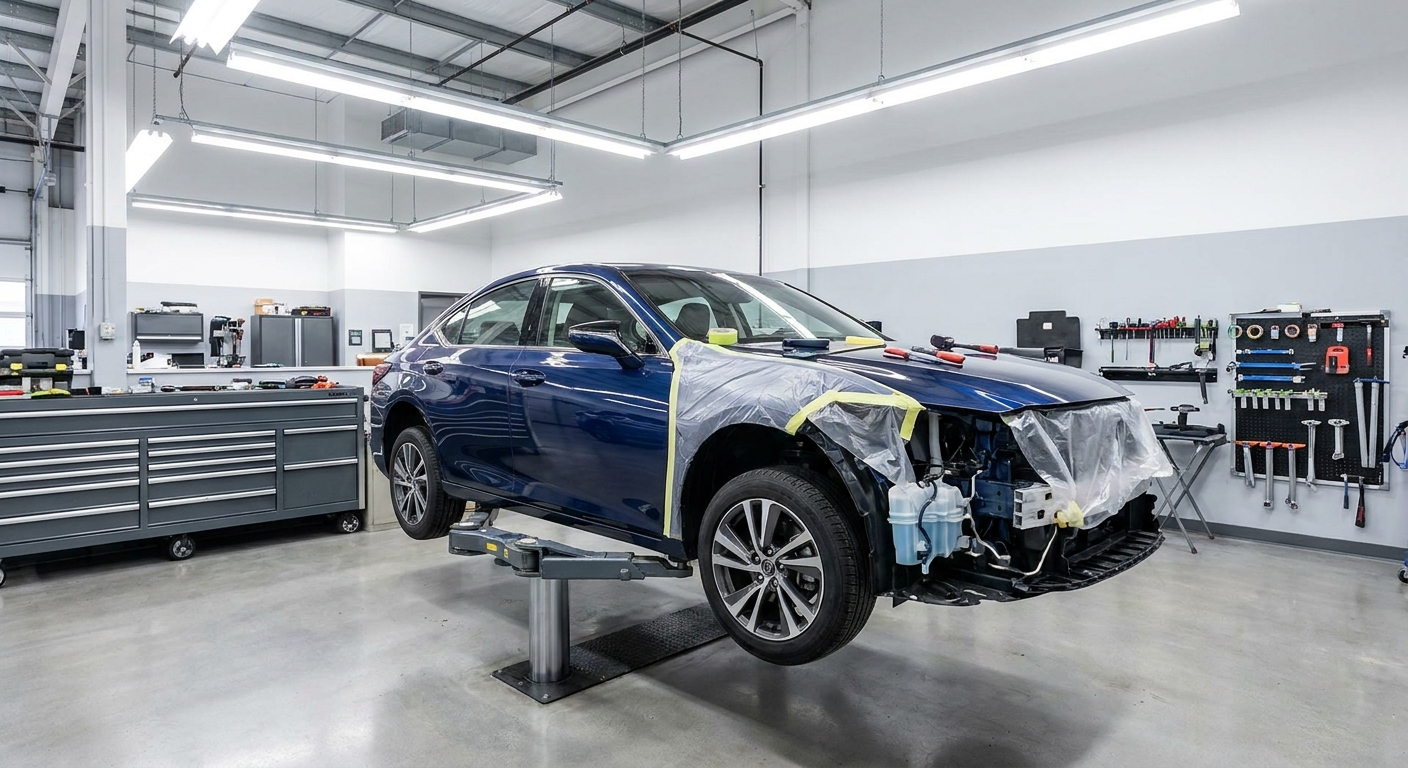
Most collision repairs in Los Angeles take anywhere from a few days for minor cosmetic work to several weeks for major structural damage. The honest answer is that it depends on the damage, parts availability, and how fast your insurer approves the estimate. Here is a realistic timeline by damage type and what actually drives the wait, so you can plan your repair and rental car with confidence.
How long does collision repair take, on average?
As a rough guide: minor cosmetic damage (small dents, scuffs, a bumper) often takes 1 to 3 days; moderate damage involving panels and paint runs about 1 to 2 weeks; and major or structural damage, frame work, airbags, or a near-total rebuild, can take 3 to 6 weeks or more. These are working-day estimates and assume parts are available, which is not always the case.
Repair timeline by damage type
| Damage | Typical time | Why |
|---|---|---|
| Minor (scuffs, small dents, one bumper) | 1-3 days | Little disassembly; paint and reassemble |
| Moderate (multiple panels, paint blend) | 1-2 weeks | Parts ordering, body work, refinishing |
| Major / structural (frame, suspension) | 3-6+ weeks | Frame measuring, parts, calibrations, QC |
| Airbags / safety systems | Adds days-weeks | OEM parts and ADAS recalibration |
What actually slows a repair down?
- Hidden damage. Once a car is torn down, shops often find damage the first estimate missed, which triggers a supplement.
- Parts availability. Back-ordered or OEM-only parts can add days or weeks, especially on newer or imported vehicles.
- Insurance approvals. Each estimate and supplement needs adjuster sign-off; slow approvals stall the work.
- ADAS calibration. Many late-model cars require sensor recalibration after the repair, which adds a step.
The stages your car goes through
A typical repair moves through check-in and estimate, insurance approval, teardown and any supplement, parts ordering, body and structural work, paint, reassembly, calibration, and a final quality and safety inspection. The waiting is rarely the body work itself, it is usually approvals and parts. A good shop keeps those moving in parallel where possible and keeps you updated at each stage.
How to keep your repair on track
- Choose a shop that documents hidden damage early so supplements are not a surprise at the end.
- Confirm whether your car needs ADAS calibration and that the shop can do it.
- Ask about parts up front, OEM vs aftermarket affects both time and your coverage.
- Arrange a rental and check your loss-of-use coverage before drop-off.
Frequently asked questions
Why is my repair taking longer than the estimate?
Usually hidden damage found during teardown or a back-ordered part, both of which require additional insurer approval.
Does insurance pay for a rental while my car is in the shop?
If you have rental/loss-of-use coverage or the at-fault party’s insurer is paying, typically yes, up to your policy limits.
Is a faster repair a lower-quality repair?
Not necessarily, but rushing structural work or skipping calibration is a red flag. A safe repair is worth the right amount of time.
The bottom line
Plan for a few days on minor work and a few weeks on major damage, and remember that approvals and parts, not the body work, usually drive the timeline. A Los Angeles shop that documents damage early, handles ADAS calibration, and communicates clearly will get you back on the road as quickly as a safe, correct repair allows.
0 Comments