

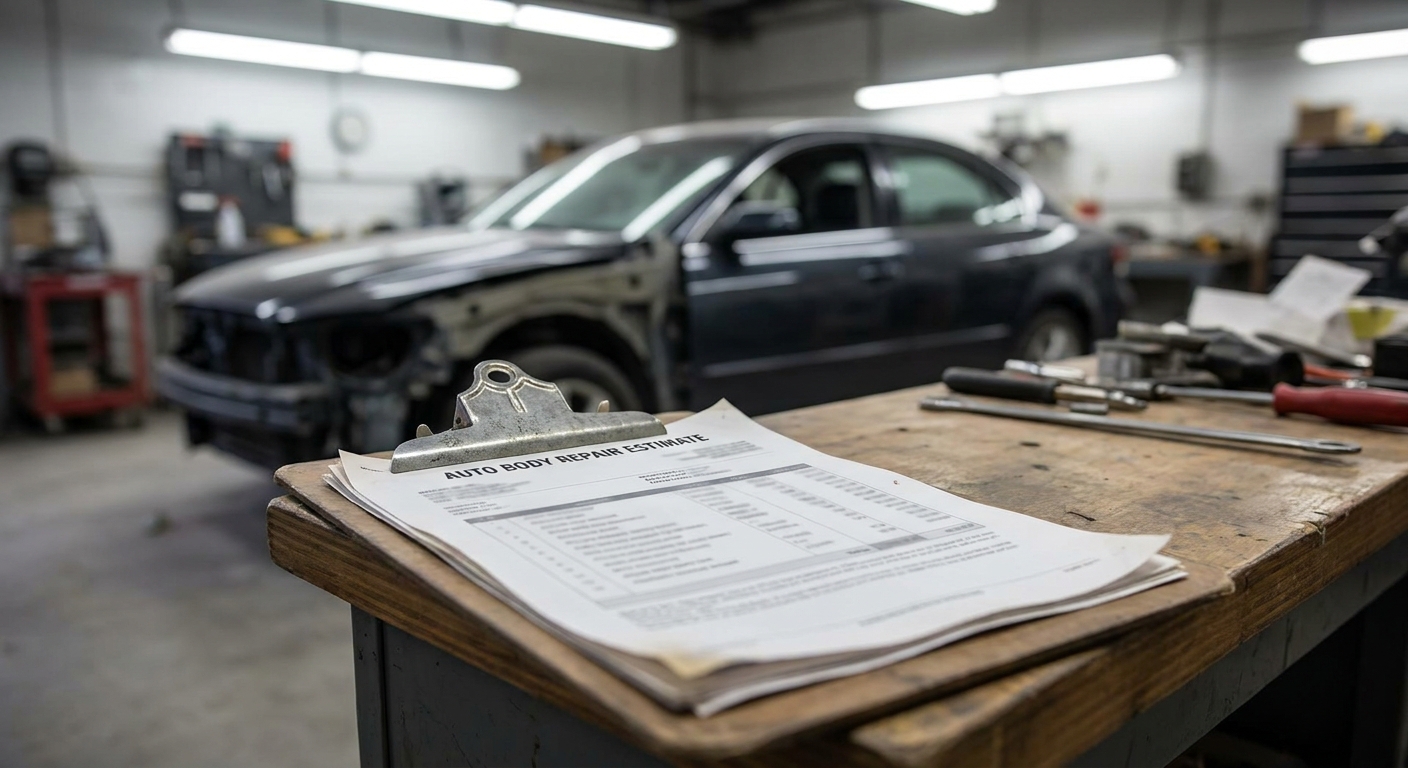
A collision repair estimate can look like a wall of codes and abbreviations, but once you know the parts, it tells a clear story about what will be done to your car and who pays for what. Learning to read a collision repair estimate helps you spot missing operations, understand parts choices, and avoid surprises when the insurer and shop settle up. Here is how to decode it line by line.
What is on a repair estimate?
Every estimate lists each operation on a separate line: the part or labor, the action, the hours or price, and a code. The total is built from parts, body labor, paint labor and materials, mechanical work, and any sublet operations like glass or calibration, plus tax. Reading it is mostly about understanding those columns and the abbreviations.
The key terms and codes
| Term | What it means |
|---|---|
| R&I / R&R | Remove & Install (reuse the part) vs Remove & Replace (new part) |
| OEM | Original Equipment Manufacturer part (from the carmaker) |
| A/M | Aftermarket part (third-party) |
| LKQ | Like Kind & Quality, a used/recycled part |
| Labor hours | Estimated time for an operation, billed at the shop’s rate |
| Betterment | A cost share if a new part improves on a worn one (e.g., tires) |
| Sublet | Work sent out, like glass or ADAS calibration |
How to actually read it
- Check the parts type column. See whether each part is OEM, aftermarket, or used, this affects fit, quality, and sometimes your coverage.
- Look for calibration and scans. Late-model cars usually need pre- and post-repair scans and ADAS calibration; make sure they are listed.
- Confirm paint and blend. Adjacent panels often need blending so color matches; this is a legitimate line, not padding.
- Note “R&I” vs “R&R.” Replacing is different from removing and reinstalling, and they cost differently.
- Find the deductible. Your out-of-pocket share appears near the totals.
What a supplement is
The first estimate is rarely the final number. Once the car is torn down, the shop often finds hidden damage and files a supplement, an addition to the estimate that the insurer must approve. A growing total is normal and usually means the shop is documenting the full, correct repair rather than cutting corners.
Red flags and good signs
Good signs: itemized operations, pre/post scans listed, OEM parts where safety matters, and clear labor lines. Watch for: no calibration on a car that needs it, all-aftermarket structural parts without discussion, or vague lump sums. If something is unclear, ask the shop to walk you through the line, a reputable shop will.
Frequently asked questions
What does R&R mean on my estimate?
Remove and Replace, the old part comes off and a new one goes on, versus R&I (Remove and Install) which reuses the original part.
Why did my estimate go up after drop-off?
A supplement, hidden damage found during teardown that needed insurer approval and added to the total.
Can I request OEM parts?
Often yes; depending on your policy you may need to cover the difference versus aftermarket. Ask the shop and your insurer.
The bottom line
An estimate is readable once you know the codes: check parts type, confirm scans and calibration, understand R&I vs R&R, and expect a possible supplement after teardown. When in doubt, have your Los Angeles shop explain any line, transparency is the mark of a good repairer and the best protection for your car’s safety and value.
0 Comments