

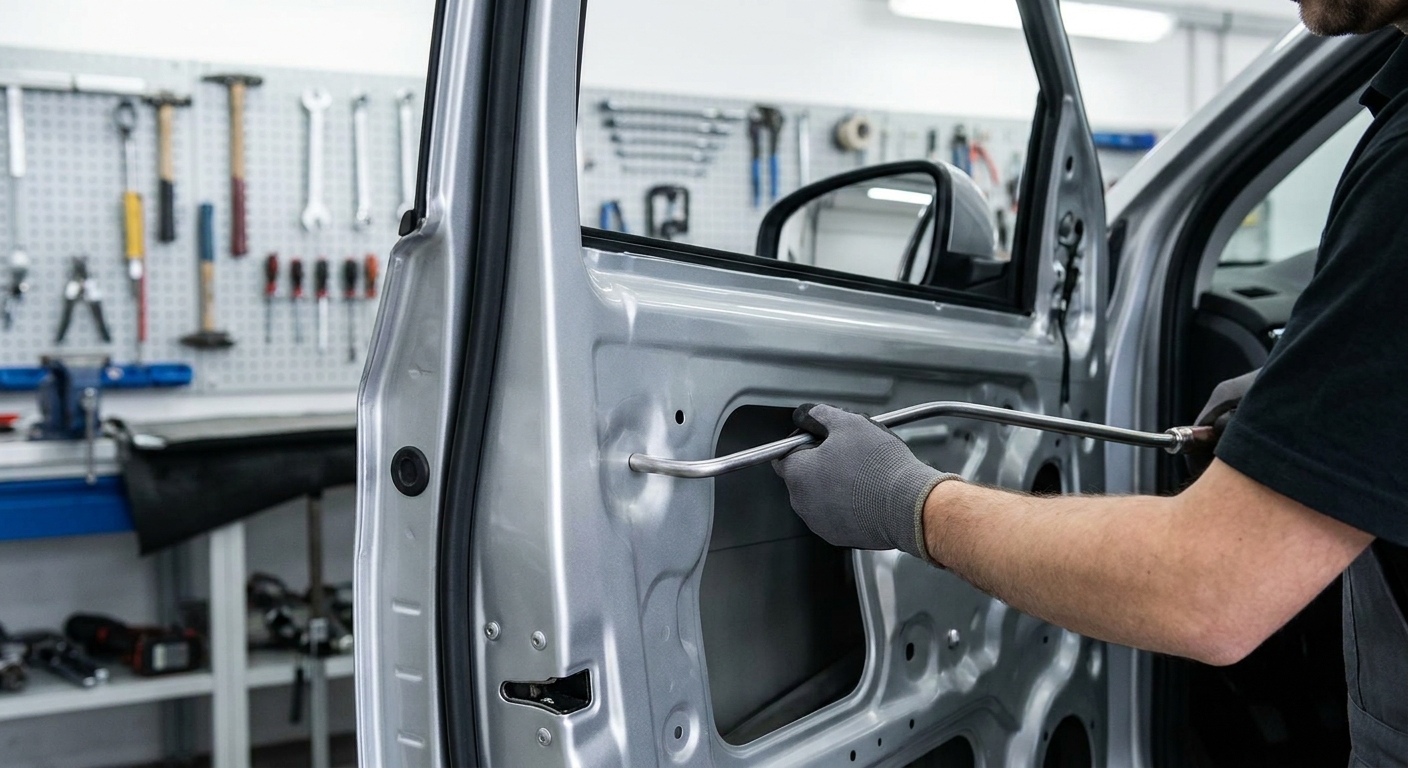
Paintless dent repair (PDR) and conventional body repair both fix dents, but they work in completely different ways, and choosing the right one saves you time, money, and sometimes your car’s factory paint. The short version: PDR massages out dents without repainting when the paint is intact, while conventional repair is needed once paint is cracked or metal is torn. Here is how to tell which your car needs.
What is paintless dent repair?
PDR uses specialized rods and tools to gently push and massage a dent out from behind the panel, restoring the original shape without filler or paint. Because it keeps your factory finish, it is faster, usually cheaper, and preserves the original paint, which matters for value. It works best on smaller dents where the paint surface is unbroken.
What is conventional repair?
Conventional repair fills, sands, primes, and repaints the damaged area, and may involve replacing a panel. It is the right (and only) choice when paint is cracked or chipped, the metal is stretched or torn, or the damage is on an edge or body line PDR cannot safely reach. It takes longer and costs more, but it is the only way to properly fix damage that broke the paint.
When does each method work?
| Condition | Best method |
|---|---|
| Small to medium dent, paint intact | Paintless dent repair |
| Door dings, hail damage, minor creases | Paintless dent repair (often ideal) |
| Cracked or chipped paint | Conventional repair |
| Sharp creases, stretched/torn metal | Conventional repair |
| Damage on a panel edge or seam | Usually conventional repair |
How to decide
- Check the paint. If it is unbroken and smooth, PDR is likely an option.
- Feel the dent. Soft, rounded dents respond to PDR; sharp creases often do not.
- Location matters. Dents far from edges and braces are easier for PDR.
- Hail damage. Multiple small dents with intact paint are a classic PDR job.
Cost and time differences
PDR is generally faster and less expensive because there is no filler, paint, or curing time, and many jobs finish same-day. Conventional repair costs more and takes longer due to materials, paint matching, and drying, but it is unavoidable once the finish is compromised. A good shop will tell you honestly when PDR will not give a proper result rather than forcing it.
Why preserving factory paint matters
Keeping original factory paint helps maintain resale value and avoids the risk of imperfect color matching. When PDR is appropriate, it is usually the better outcome for the car. When it is not, a quality refinish with proper blending is what protects both appearance and value.
Frequently asked questions
Can PDR fix any dent?
No. It works when the paint is intact and the metal is not stretched or torn; cracked paint or sharp creases need conventional repair.
Is paintless dent repair cheaper?
Usually yes, because it skips filler, paint, and curing time, and often finishes faster.
Will insurance cover PDR for hail damage?
Often yes; hail with intact paint is a common PDR claim. Confirm with your insurer and shop.
The bottom line
If the paint is intact and the dent is soft, paintless dent repair is usually faster, cheaper, and better for your car’s value. Once paint is cracked or metal is torn, conventional repair is the right call. A trustworthy Los Angeles shop will assess the dent and recommend the method that actually restores your car, not just the quicker one.
0 Comments