

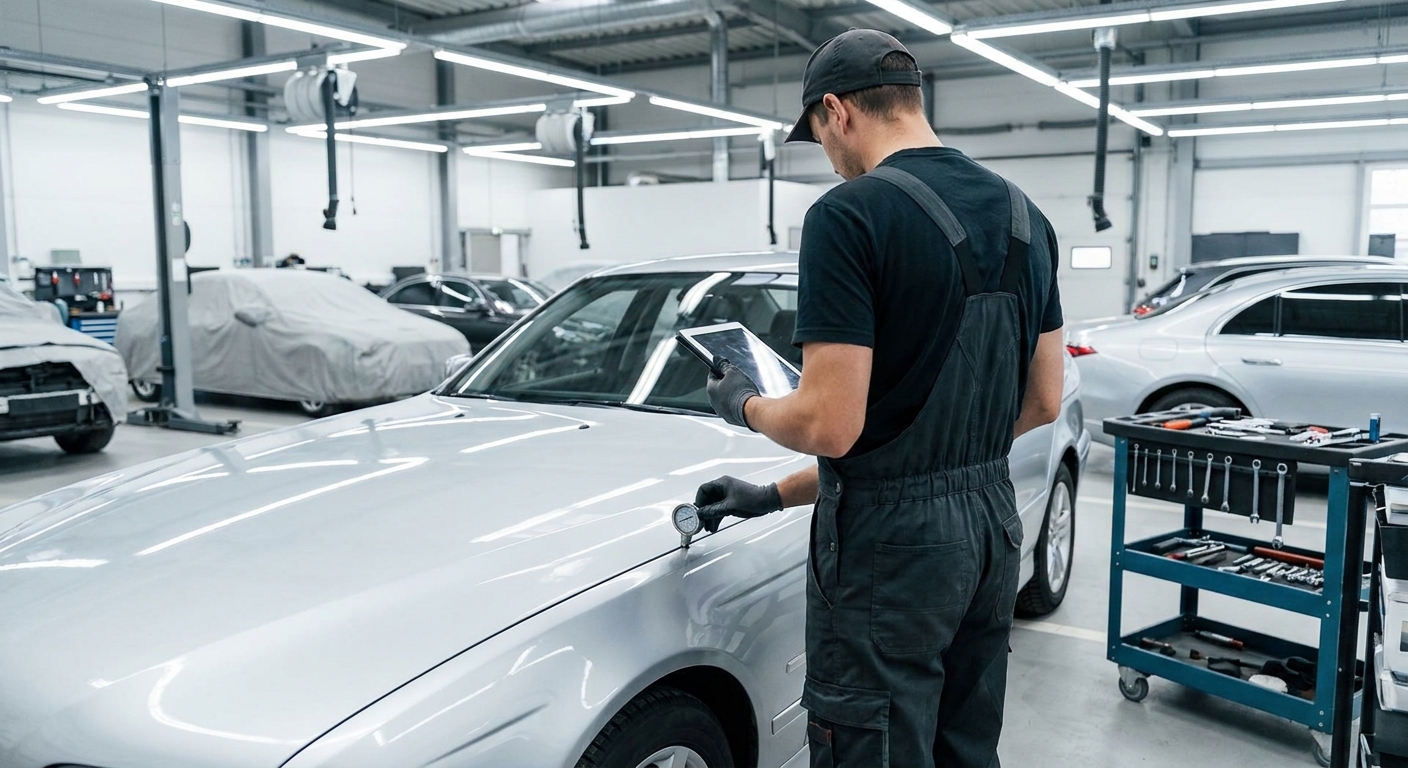
Before you drive away from a collision repair, the car should pass a thorough post-repair safety inspection, the final check that confirms the work was done correctly and the car is safe. A good shop builds this into the process; as the owner, knowing what should be checked helps you confirm the repair is complete. Here is what a proper post-repair inspection covers and how to verify it.
What is a post-repair inspection?
It is the quality-control and safety check performed after the repair is finished and before delivery. It confirms that structural work meets specification, safety systems function, panels fit and the paint matches, and nothing was missed. On modern cars it also confirms that electronic systems and driver-assistance features were restored, not just the visible bodywork.
What should be on the checklist?
| Area | What’s verified |
|---|---|
| Structure / frame | Measured to spec; alignment correct |
| Safety systems | Airbags, seatbelts, sensors functioning; no warning lights |
| ADAS calibration | Cameras/radar recalibrated and passing |
| Mechanical | Wheel alignment, suspension, fluids as needed |
| Fit & finish | Even panel gaps, doors/trunk close right, color match and blend |
| Road test | No pulling, noises, or warning lights at speed |
Why the inspection matters
A car can look perfect and still have an uncalibrated sensor, a missed alignment, or a safety system that will not perform in a crash. The post-repair inspection is what catches those issues before you rely on the car. It is the difference between a car that looks fixed and one that is verified safe.
What you should do at pickup
- Ask for documentation of the repair, including any scans and calibrations.
- Check panel gaps and that doors, hood, and trunk open and close cleanly.
- Look at the paint match in daylight, not just under shop lights.
- Confirm there are no dashboard warning lights.
- Take a short test drive to listen for noises and feel for pulling.
What documentation should you receive?
A quality shop provides a final invoice with the operations performed, pre- and post-repair scan results, calibration confirmations, and the workmanship warranty. Keep these, they prove the repair was complete and help with resale or any future diminished-value discussion.
What if something is not right?
If you notice a warning light, a panel that does not line up, off paint, or a pull while driving, raise it with the shop right away. A reputable repairer stands behind its work and addresses post-repair issues under its warranty. Catching it at pickup is far easier than weeks later.
Frequently asked questions
Should I get documentation of calibrations?
Yes. Ask for scan and calibration records; they confirm safety systems were restored and help with resale.
What are signs of an incomplete repair?
Uneven panel gaps, mismatched paint, dashboard warning lights, or the car pulling at speed.
Who fixes problems found after pickup?
A reputable shop addresses them under its workmanship warranty; report issues promptly.
The bottom line
A post-repair safety inspection confirms your car is not just cosmetically fixed but structurally and electronically safe. At pickup, review the documentation, check fit, finish, and warning lights, and take a quick test drive. A Los Angeles shop that inspects, documents, and warranties its work is the one that sends you off in a car that is truly repaired.
0 Comments