

Who Pays for Pothole Damage in Los Angeles?
In LA, who pays for pothole damage depends on which agency owns the road and whether that agency had prior notice of the hazard. The answer is almost never automatic, and reimbursement rates are low, but knowing the decision tree keeps your options open while your car gets fixed.
Road ownership in LA breaks down into three buckets. City of Los Angeles streets are maintained by the LA Bureau of Street Services. Unincorporated areas and some contract cities fall under LA County. State highways and freeways, including the 101, 405, and 10, belong to Caltrans. Hitting a pothole on the 405 near Sepulveda Pass means you file with Caltrans, not the city. Getting this wrong means filing with the wrong agency and losing time against the deadline.
Under California law, a public entity is only liable if the pothole constituted a “dangerous condition” AND the agency knew or reasonably should have known about it and failed to fix it within a reasonable time. A brand-new pothole that opened the morning of a storm almost never meets this test. A pothole that had been reported to 311 three months earlier, and sat unfilled, has a much better argument. That distinction is everything when you file.
What Does Pothole Damage Actually Cost to Repair in Los Angeles?
Pothole damage repair in Los Angeles covers more than a tire swap. The force of a hard impact at speed loads the suspension, rims, undercarriage panels, and even the front bumper air dam simultaneously. Here are realistic repair cost ranges from a full-service body shop perspective:
| Damage Type | Typical LA Repair Cost | Notes |
|---|---|---|
| Bent rim (straightening) | $75–$400 per wheel | Press/heat straightening; cracked wheels must be replaced |
| Rim replacement (alloy) | $150–$800+ per wheel | OEM alloy on luxury or sport vehicles can exceed $1,700 |
| Tire replacement | $100–$350+ per tire | High-performance and run-flat tires run higher |
| Strut / shock replacement | $400–$900 per pair | Labor-intensive; often found in pairs |
| Alignment | Up to ~$300 | Required after any suspension or rim work |
| Sway-bar link / strut mount | $150–$400 | Common after moderate-force impacts |
| Cracked front bumper / air dam | $300–$900 | Body panel scrape from bottoming out on raised pavement edge |
| Bent subframe / control arm | $800–$3,000+ | Requires frame measurement; affects structural safety |
| Scraped undercarriage panel | $200–$600 | Often missed without a lift inspection |
The AAA estimates that pothole-related repairs average $406–$600 per incident, but that figure understates multi-wheel or suspension hits. A single hard strike at freeway speed can involve bent rims on two wheels, two blown tires, a failed strut mount, and an alignment pull, easily $2,000–$4,000 at a shop that documents everything correctly for a claim. See our breakdown of wheel and rim repair after curb or collision damage for more on straightening vs. replacement decisions.
How Do You Know What the Pothole Actually Hit?
Before you drive the car anywhere, run this diagnostic check. Symptoms point to specific repairs, and documenting them at the scene strengthens your government claim.
- New vibration between 50–70 mph that wheel rebalancing won’t fix: likely a bent rim. Have the wheel measured on a flat-check machine, not just visually inspected.
- Clunking or rattling over bumps: sway-bar links or strut mounts. These are small parts but they fail fast under repeated stress.
- Clicking sound only in turns: CV joint damage. Less common but serious, don’t ignore it.
- Nose-diving, excessive bouncing, or visible fluid at the strut: strut or shock damage. Pull off safely; continuing to drive can accelerate wear on tires, control arms, and subframe bushings.
- Steering pulling strongly to one side: alignment is off. This can indicate anything from a tire issue to a bent control arm.
- Scraping or dragging sound at low speed: check the front bumper air dam or a loose undercarriage splash shield.
A cracked wheel, even a hairline crack, should be replaced, not re-straightened. Driving on a previously repaired wheel that takes a second impact creates a real blowout risk at highway speed. If you’re unsure, a shop can dye-test the wheel under UV light to reveal hidden fractures.
What Should You Do at the Scene of a LA Pothole Hit?
What you capture in the first ten minutes determines how strong your government claim will be. Most denied claims fail not because the damage wasn’t real, but because the documentation is too thin to prove prior notice or road ownership.
- Pull over safely and call 311. Reporting the pothole via the city’s 311 app or by phone creates a timestamped record in the city’s database. If the pothole already had prior 311 reports, that prior notice is the key to a valid claim.
- Photograph the pothole with a reference object. Place a coin, water bottle, or your hand next to the pothole in the frame. Photograph its depth from multiple angles. A shallow scuff and a four-inch-deep crater support very different claims.
- Photograph all four corners of your car immediately. Show any visible tire damage, wheel deformation, or bumper scraping. Timestamp metadata on your phone photos matters.
- Note the exact location: street name, cross street, lane number, and direction of travel. “Near La Brea and Sunset, number two lane westbound” is enough to identify the road’s owner and the repair-history log for that stretch.
- Note whether you’re on a surface street, boulevard, or freeway. Surface streets in city limits = City of LA. Freeways and state routes = Caltrans. County roads in areas like Altadena or Unincorporated East LA = LA County.
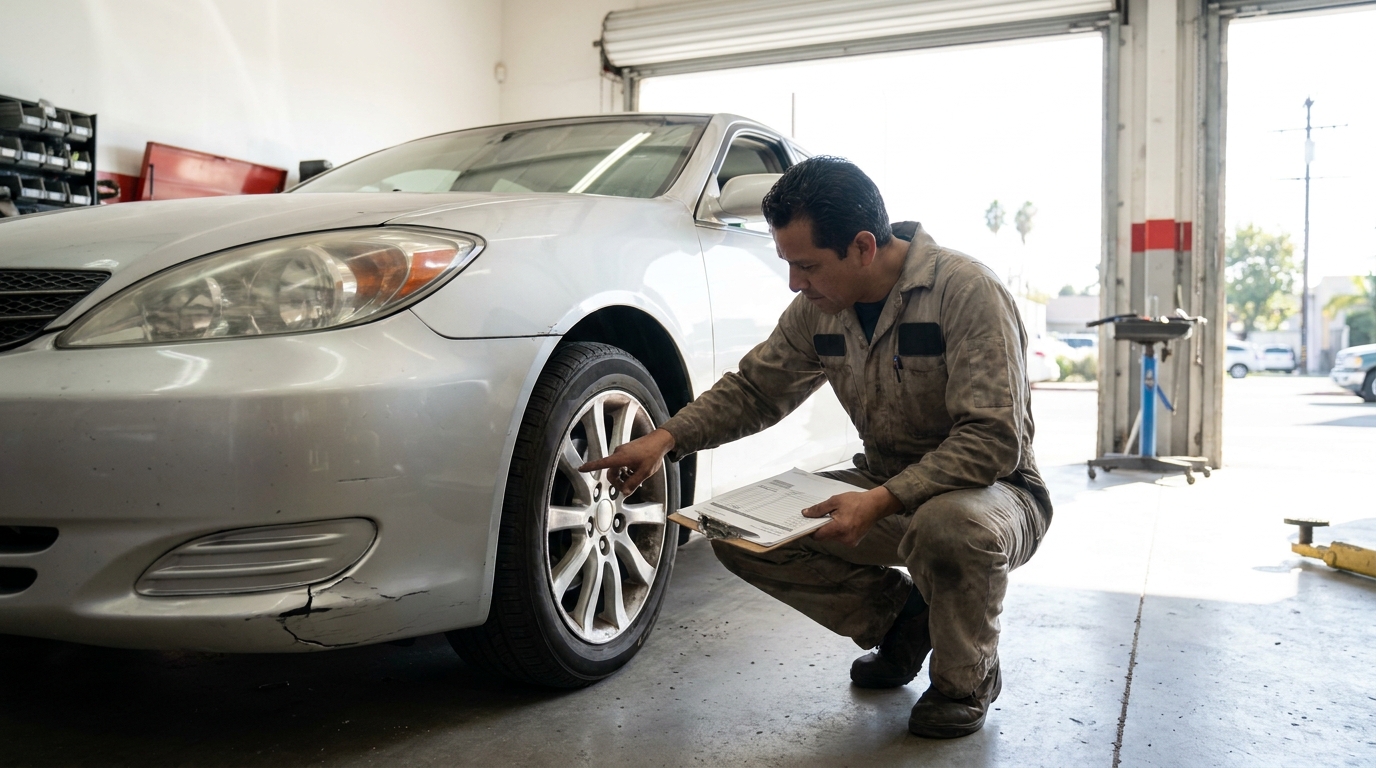
- Get a professional repair estimate before filing any claim. A written estimate on shop letterhead, listing each damaged component separately, is required documentation for both government and insurance claims. An insurance adjuster or city reviewer who sees a single vague number is more likely to deny the claim than one who sees a line-item estimate from a licensed body shop.
City of LA vs. LA County vs. Caltrans: Which Claim Do You File?
The road owner determines your claim route. Here is the process for each agency:
| Agency | Roads Covered | Claim Form / Portal | Key Deadline | Max Payout |
|---|---|---|---|---|
| City of Los Angeles | City surface streets (not freeways) | Form 100-A via LA City Clerk online portal, mail, or in person | 1 year from incident (property damage) | No stated cap; city discretion |
| LA County | Unincorporated areas, contract cities | LA County Claims Board, county website | 1 year from incident (property damage) | No stated cap; county discretion |
| Caltrans | State highways and freeways (101, 405, 10, 110, etc.) | Direct Caltrans claim form at dot.ca.gov | 6 months from incident | Up to $10,000 directly; above that, California Government Claims Program (DGS) |
A critical note on deadlines: California Government Code sets a six-month deadline for personal injury claims against a public entity, but property damage claims, including vehicle damage, have a one-year deadline. The Caltrans direct-claim process, however, has its own internal filing guidance that in practice favors earlier filing. File as soon as your estimate is in hand, regardless of which agency you’re targeting.
The Caltrans path in more detail: Caltrans reimburses up to $10,000 for freeway pothole damage filed directly via its District 7 Claims Office (Los Angeles and Ventura Counties). Damage above $10,000 must go through the California Government Claims Program administered by the Department of General Services. You can reach that program toll-free at 1-800-955-0045 or at gcinfo@dgs.ca.gov. The Caltrans claim requires the county where the incident occurred, the highway number, the direction of travel, and a written repair estimate.
The City of LA path: Use Form 100-A, the “Claim for Damages to Person or Property,” available through the LA City Clerk’s Office. Online filers receive a claim number on submission. The city does not accept emailed or faxed claims, use the online portal, mail, or in-person filing only. Include the exact street address and lane, a description of the incident, photographs, and your repair estimate or invoice. Expect the process to take months: the city paid only about 2% of pothole claims in one recent year, compared to 22% the prior year. Reimbursement is far from guaranteed, but a fully documented claim is the only kind that has any chance.
Should You File an Insurance Claim Instead?
Pothole damage falls under collision coverage, not comprehensive, it is treated as an at-fault-type incident on most policies. Whether to file depends on a simple deductible calculation:
- Skip the insurance claim when the repair cost is below or close to your deductible. A $340 tire replacement against a $500 deductible nets you nothing and puts a claim on your record.
- File the insurance claim when damage spans multiple wheels, involves suspension components, or hits a high-end wheel on a luxury or performance vehicle. Two bent alloy wheels, two tires, a strut mount, and an alignment on a German sedan can run $3,000–$5,000, well above most deductibles.
- Run both tracks in parallel when damage is extensive. File a government claim immediately (to preserve your place in line) and open an insurance claim the same day. If the government pays, you can inform your insurer. If neither pays fully, you’re not stuck.
One important angle most cost guides miss: if the pothole also scraped your front bumper cover, cracked an air dam, or damaged an undercarriage panel, those are body components your collision coverage addresses. A body shop that can document the full scope, rim, suspension, and panel damage, produces an estimate that captures everything your insurer and the city reviewer need to see in one place. This is also where a supplement later becomes relevant: if hidden damage to a subframe or control arm is discovered during disassembly, your insurer will need a written supplement to cover the additional cost. See our guide to what a supplement in collision repair means so you’re not caught off guard.
For luxury, EV, or carbon fiber-bodied vehicles, the stakes are higher still. A hard pothole impact at 60 mph can crack a carbon fiber undertray or damage battery undercarriage protection on an EV. These repairs require specialist documentation that a general shop may not produce correctly. Our post on carbon fiber repair in Los Angeles covers what that evaluation process looks like.
Why Get a Shop Inspection Even If the Car Seems Fine?
Pothole hits create hidden damage that only becomes obvious weeks later, or in a sudden failure at highway speed. A hard impact can slightly bend a subframe without snapping it, misalign a control arm without pulling the steering immediately, or crack a wheel without an audible change in how the car drives. Showing up to a body shop only when symptoms appear means you’ve driven hundreds of miles on compromised geometry, accelerating tire and bearing wear throughout.
There is also a claim-documentation reason to get an inspection before the car is driven extensively. A shop that puts the car on a lift, takes frame measurements, and produces a written report creates a contemporaneous record that ties the damage to the incident. That report is harder for an insurance adjuster or city reviewer to dispute than a phone call two weeks later saying “I noticed it pulling to the left.” The estimate also establishes a dollar figure on your claim before filing, which is a required attachment to both the Caltrans claim form and the LA City Form 100-A.
Common Mistakes to Avoid
- Filing with the wrong agency. Check whether you were on a surface street, boulevard, state highway, or freeway before submitting any form. A claim to the city for freeway damage will be returned or denied.
- Filing too late. The Caltrans claim process favors early filing. For city and county property damage, you have one year, but waiting six months means delayed payment while your repair costs sit unpaid.
- Skipping the professional estimate before filing. A vague description of “wheel and suspension damage” without a line-item estimate from a licensed shop gives the reviewing agency grounds to deny or underpay your claim.
- Having a cracked wheel re-straightened. A cracked alloy should be replaced. Re-straightening a structurally compromised wheel is a safety risk, not a cost savings.
- Filing an insurance claim on small repairs at or near your deductible. A collision claim stays on your record and can affect your premium. Run the math before you file.
- Skipping the alignment check after rim or suspension work. Even a rim straightening changes the wheel’s geometry slightly. An alignment should follow any wheel or suspension repair.
- Not photographing the pothole itself. Photos of your wheel damage without photos of the pothole leave you with no way to prove a specific dangerous condition at a specific location.
Frequently Asked Questions
Does the City of Los Angeles have to pay for my pothole damage?
Not automatically. California law requires you to prove the pothole was a “dangerous condition” that the city knew about or should have known about, and failed to fix within a reasonable time. New potholes that formed during a recent storm are routinely denied. The city paid only about 2% of pothole damage claims in one recent year. Document prior 311 reports for that location if possible, that evidence of notice is the most powerful factor in a successful claim.
What is the deadline to file a pothole damage claim in Los Angeles?
For property damage claims against the City of Los Angeles or LA County, you have one year from the date of the incident. For personal injury claims, the deadline is six months. Caltrans claims for freeway pothole damage should be filed as promptly as possible; their direct-pay program covers up to $10,000, and claims above that go to the California Government Claims Program. File early regardless of which agency owns the road, later filings are harder to document.
Is pothole damage covered under comprehensive or collision insurance?
Pothole damage is covered under collision coverage, not comprehensive. It is treated similarly to a single-vehicle at-fault accident, which means it counts against your claim history. If your repair cost is close to or below your deductible, it is usually not worth filing. Save your collision claim for multi-wheel damage, suspension failures, or high-value wheel replacements where the repair total significantly exceeds your deductible.
What if the pothole was on a freeway like the 405 or 101?
Freeways and state routes in California belong to Caltrans, not the City of LA. File your claim directly with the Caltrans District 7 Claims Office, which covers Los Angeles and Ventura Counties. Caltrans reimburses up to $10,000 directly; amounts above that go through the California Government Claims Program administered by the Department of General Services. You’ll need the highway number, direction of travel, milepost or nearest exit, date and time, and a written repair estimate.
What should I bring to the body shop after hitting a pothole?
Bring your dated pothole photos, the exact incident location, your 311 report reference number if you have one, and your insurance card. The shop needs the location detail to write an accurate estimate that ties to the event, not just a generic “bent rim” line item. Ask for a written line-item estimate covering every damaged component, rims, tires, suspension parts, alignment, and any body or undercarriage panels, not a single lump-sum number. That document becomes your claim attachment.
0 Comments