

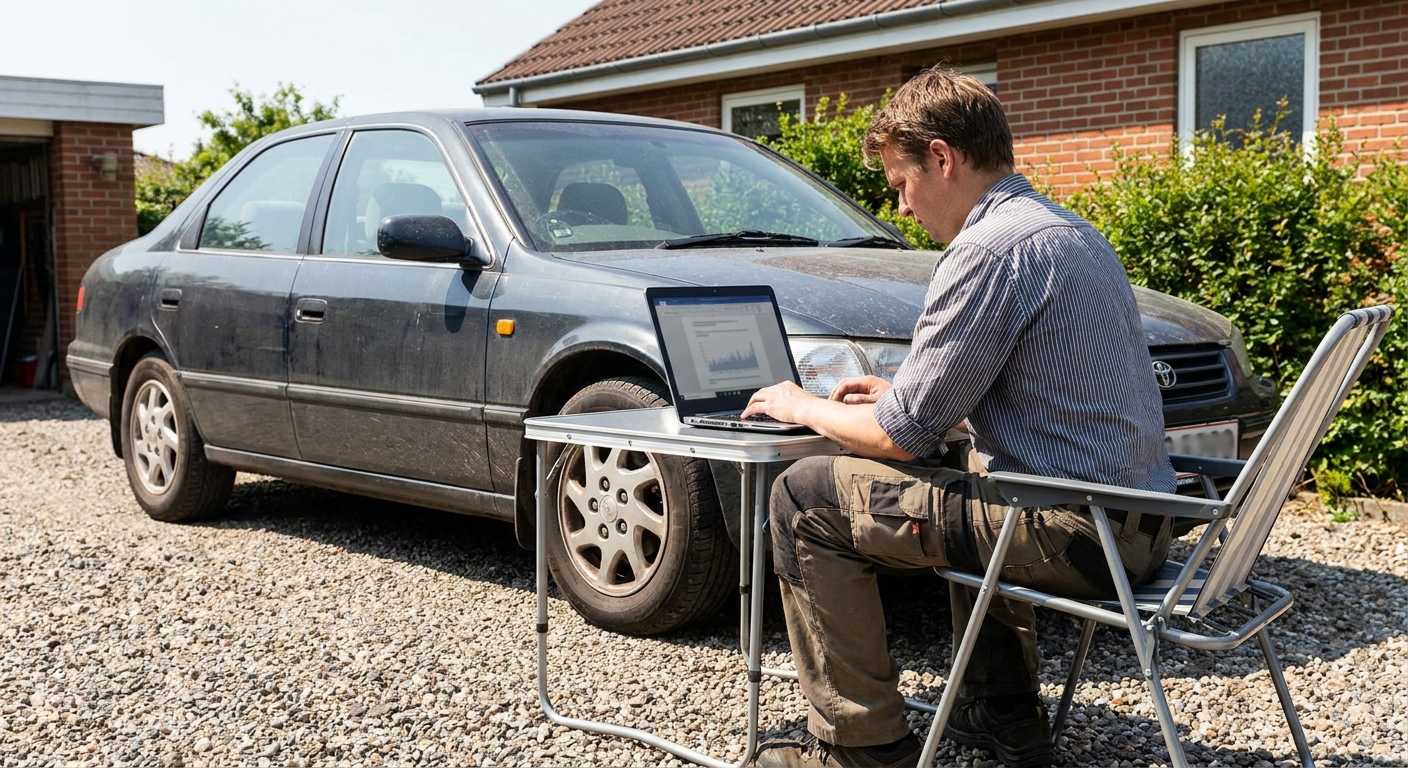
Whether a collision repair shows up on CARFAX depends on whether the accident or repair was reported to a source CARFAX collects from, not on the repair itself. Many repairs do appear; some never do. If you are worried about your car’s history report after a fix, here is how vehicle history reporting actually works and what you can and cannot control.
How does CARFAX get its information?
CARFAX and similar services compile data from thousands of sources: insurance claims, police accident reports, state DMV and title records, auto auctions, and many service and repair facilities. An event shows up only if one of those sources reports it. The body shop is just one possible source, and not every shop reports to these databases.
What typically does and does not get reported?
| Event | Likely on the report? |
|---|---|
| Insurance claim filed | Often yes |
| Police accident report | Often yes |
| Salvage or branded title | Yes (title records) |
| Out-of-pocket repair, no claim | Frequently not reported |
| Minor cosmetic work | Often not reported |
This is why a repaired car may show “accident reported” while another shows nothing, the difference is usually whether a claim or police report existed, not the quality of the work.
Does an accident on CARFAX mean the car is bad?
No. A reported accident only means an event was recorded; it says nothing about how well the car was repaired. A properly repaired vehicle with a clean, complete repair can be perfectly sound. Conversely, an absence of records does not guarantee a clean history. The report is a starting point, not the whole story.
Can a repair be removed from CARFAX?
You generally cannot erase accurate records. If a report contains a genuine error, CARFAX has a dispute process, but a legitimately reported accident or claim will stay. Be wary of anyone promising to “clean” a vehicle history; the honest path is transparency plus documentation of a quality repair.
How a quality repair protects you
Since you cannot control reporting, focus on what you can: a complete, documented repair. Keep the repair order, parts list, and any calibration records. If the car shows an accident on its history, that documentation, OEM parts, proper structural repair, passed calibrations, reassures a future buyer far more than an empty report. It can also support a diminished value claim if you were not at fault.
What buyers should take from a history report
- Treat “accident reported” as a prompt to ask for repair records, not an automatic dealbreaker.
- A pre-purchase inspection by a body shop reveals repair quality the report cannot.
- No reported accidents does not prove a car was never repaired.
Frequently asked questions
Will my body shop report the repair to CARFAX?
Some shops report, many do not. The bigger factor is usually whether an insurance claim or police report was filed.
Does paying out of pocket keep it off CARFAX?
Often, but not guaranteed, a police report or other source could still record the event.
Can I remove an accident from my CARFAX?
Only genuine errors can be disputed; accurate records remain. Focus on documenting a quality repair instead.
The bottom line
A collision repair shows on CARFAX only if a reporting source, usually an insurance claim or police report, recorded the event, and the report reflects reporting, not repair quality. You cannot reliably control what appears, so keep thorough repair documentation. A well-documented, properly repaired car stands up to any history report.
0 Comments