

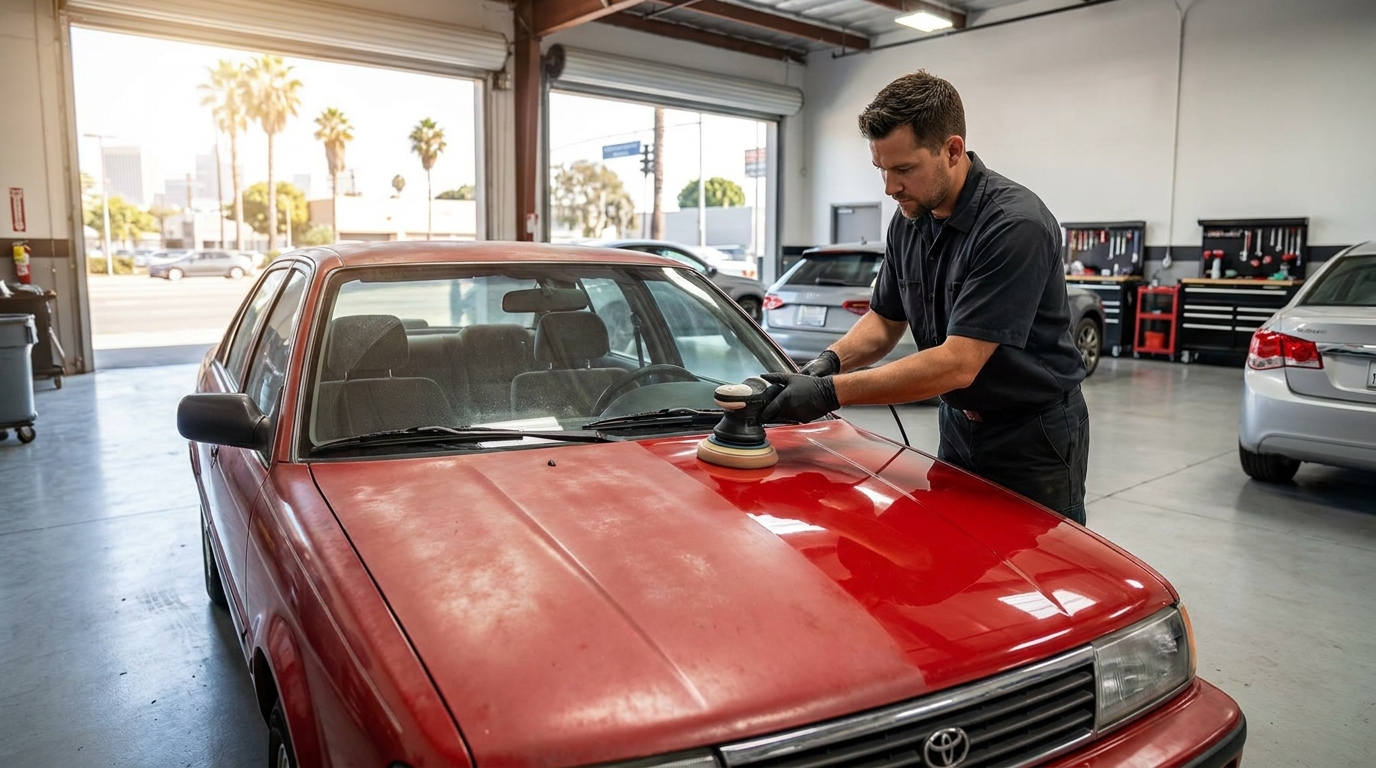
Sun damaged car paint repair in Los Angeles usually means refinishing the affected panels: a body shop sands down the failed clear coat, re-primes if needed, then sprays fresh base and clear coat and blends it into the surrounding panels. Light oxidation can sometimes be polished out, but once the clear coat is peeling, flaking, or showing chalky white patches, the only lasting fix is professional refinishing. LA’s intense year-round UV makes this one of the most common paint problems we see.
Why does car paint fade and peel so fast in Los Angeles?
Southern California’s sun is the single biggest reason clear coat fails early here. Unlike scratches or collision damage, sun damage builds up slowly across every panel that faces the sky.
- Constant UV exposure. Ultraviolet light breaks down the resins in the clear coat, weakening the bond between it and the color layer underneath.
- Heat cycling. Daytime heat and overnight cooling expand and contract the paint, which speeds up cracking and delamination.
- Street parking. Cars left outside in neighborhoods across LA get far more sun than garaged vehicles.
- Smog and road grime. Airborne contaminants etch into a clear coat that UV has already weakened.
The result is a clear coat that turns hazy, then chalky, then begins to lift in patches — most often on the roof, hood, and trunk lid first.
What are the warning signs of clear coat failure?
Catching the problem early can mean the difference between a quick polish and a full panel respray. Watch for these signs:
- Dull or cloudy patches that don’t come back to a shine after washing.
- White or chalky areas where the surface looks faded compared to nearby panels.
- Flaking or peeling where the top layer lifts away and exposes the color coat or primer.
- Rough texture that feels gritty instead of smooth and glassy.
- Water no longer beading on the surface the way it once did.
Once you see flaking or exposed primer, the damage will spread. UV and moisture get under the lifted edge and keep working outward, so the repair area only grows with time.
Can sun-damaged paint be polished, or does it need a respray?
It depends entirely on how deep the damage goes. The clear coat is a thin protective layer over the colored base, and how much of it remains decides the repair.
When polishing may work
If the surface is only oxidized — dull or lightly hazed but still intact — a machine polish or wet-sand-and-buff can often restore the shine. There is still enough clear coat left to cut back and refine.
When refinishing is required
Once the clear coat is peeling, flaking, or worn through to the color layer, polishing won’t help. There is nothing left to buff. The panel has to be sanded down and resprayed with fresh base and clear coat, then blended into the adjacent panels so the color matches.
A reputable shop inspects the panel in good light and tells you honestly which category you’re in. Our team also walks owners through how color matching and blending keeps a fresh respray invisible against older, sun-faded paint.
Polish vs. panel respray vs. full repaint
| Option | Best for | What’s involved | Lasting result? |
|---|---|---|---|
| Machine polish | Light oxidation, hazing, no peeling | Cut and buff existing clear coat | Yes, if clear coat is intact |
| Single-panel respray | One or two panels peeling (e.g. just the roof or hood) | Sand, prime, base, clear, blend into neighbors | Yes — restores full protection |
| Multi-panel refinish | Several panels failing across the car | Refinish each affected panel and blend | Yes |
| Full repaint | Widespread failure on most panels | Strip, prep, and repaint the whole vehicle | Yes — best for badly weathered cars |
How do I keep sun damage from coming back?
A quality respray restores the factory-style protection, but LA’s sun never lets up. A few habits protect the new finish:
- Park in shade or a garage whenever you can, especially through summer.
- Use a car cover if you street-park for long stretches.
- Wash regularly to remove grime that grinds at the clear coat.
- Apply a wax or sealant a few times a year to add a UV barrier.
- Address chips early before sun and moisture get under the finish.
For more on protecting a new finish, see our guide on caring for your car after a fresh paint job.
How long does sun-damage paint repair take?
A single-panel respray typically takes a couple of days once the paint is mixed and matched, since the clear coat needs time to cure properly before the car goes back on the road. A multi-panel or full repaint takes longer because each surface is prepped, sprayed, and cured in turn. A good shop won’t rush curing — paint that isn’t fully cured won’t hold up to the very UV that caused the original damage.
Choosing a Los Angeles shop for sun-damaged paint
Sun-damage refinishing lives or dies on prep and color matching. Faded panels are rarely still the exact factory color, so the shop has to match the car as it looks now and blend carefully. Look for a shop that inspects in proper light, explains whether you need a polish or a respray, and shows you how it will blend the repair. Our breakdown of how to choose a collision repair shop in Los Angeles applies just as much to paint work.
If your car’s paint is fading, peeling, or going chalky under the LA sun, have it looked at before the damage spreads to more panels. Catching clear coat failure early keeps the repair smaller, faster, and less expensive.
Frequently asked questions
Is sun damage to car paint covered by insurance?
Usually no. Standard auto policies cover sudden, accidental events like collisions, hail, or vandalism. Clear coat failure from years of sun exposure is treated as gradual wear and tear, which most policies exclude. Sun-damage refinishing is typically an out-of-pocket repair, so it’s worth getting it handled before the damage spreads across more panels.
Can I just touch up the peeling spots myself?
DIY touch-up is fine for small stone chips, but it rarely works on sun-failed clear coat. The damage almost always extends past the visible edge, so a spot fix peels again within months. Refinishing the full panel and blending it is what actually stops the failure from creeping outward.
Why does the roof and hood fade first?
Those horizontal panels catch the most direct overhead sun and trap the most heat, so the clear coat there breaks down sooner than on the vertical doors and fenders. That’s why an LA car often shows a dull, chalky roof long before the rest of the body looks worn.
Will a new respray fade just as fast?
Not if it’s done right and protected. Modern refinish clears include UV inhibitors, and keeping the car shaded, washed, and waxed slows future breakdown considerably. The original factory finish often failed early because it sat outside, uncovered, for years — habits you can change going forward.
0 Comments