

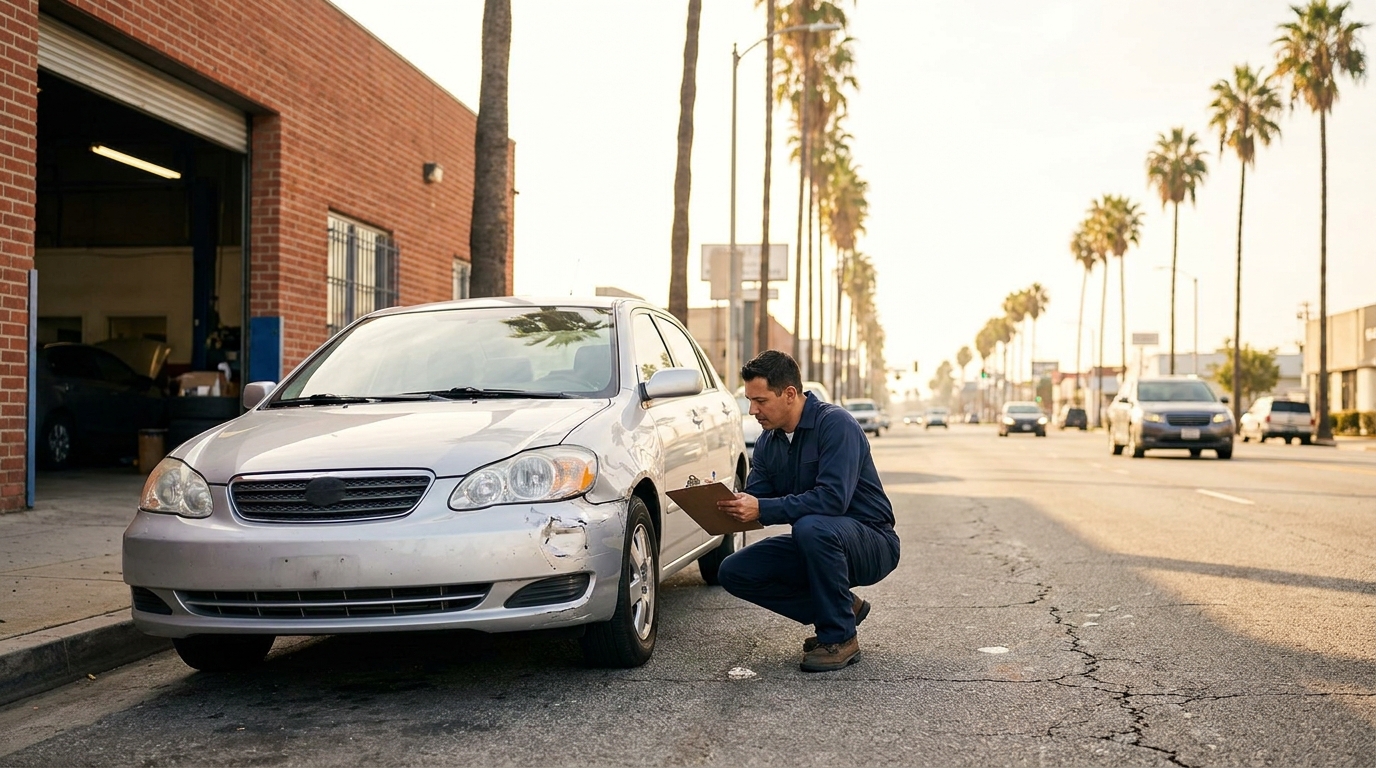
What Should a Van Nuys Driver Look for in an Auto Body Shop?
The right auto body shop in Van Nuys comes down to four verifiable credentials, not star ratings. If a shop can check all four boxes, it clears the basic bar. If it can’t, keep looking.
- I-CAR Gold Class certification. This is the industry’s most recognized training standard. Gold Class means every tech in the shop completes ongoing education on new vehicle structures and materials. Several long-running Valley shops have held this status for decades, it’s the floor, not the ceiling.
- OEM or manufacturer certification. For a Toyota, BMW, or Tesla, ask whether the shop is approved by the automaker to follow factory repair procedures. This matters most for high-strength steel, aluminum, and EV battery structures where a wrong weld or wrong adhesive is a safety failure.
- Lifetime written warranty on workmanship. A shop that won’t put a warranty in writing is telling you something. Reputable Valley shops offer lifetime warranties covering paint, bodywork, and structural repairs. Get it on paper before you authorize anything.
- Computerized color matching. The Valley’s intense sun fades paint fast. A shop using a PPG waterborne or equivalent computerized spectrophotometer system will blend adjacent panels so the repair is invisible. Hand-mixed paint guesswork rarely holds up in LA sun. Learn more about caring for fresh paint after a collision repair to protect any color-match work long-term.
Independent Shop vs. Insurer DRP Shop: Which Is Better in the Valley?
Direct Repair Program (DRP) shops have a contract with your insurer to process claims quickly within negotiated cost limits. Independent shops work for you. Neither is automatically better, but the differences are real.
| Factor | DRP / Insurer-Preferred Shop | Independent Certified Shop |
|---|---|---|
| Parts selection | May default to aftermarket to meet insurer pricing | Advocates for OEM; negotiates supplements |
| Labor rate | Pre-negotiated (often lower) | Market rate; shop sets based on skill and overhead |
| Loyalty | Insurer relationship drives volume | Customer relationship drives referrals |
| Supplement flexibility | Insurer approval required at each step | Shop documents and pushes harder for full scope |
| Quality ceiling | Adequate for routine repairs | Higher for complex structural or luxury repairs |
California law under Insurance Code Section 758.5 is clear: your insurer cannot require you to use a specific shop. If an adjuster implies otherwise, that is steering, and it is prohibited. You have the legal right to choose any licensed body shop in California, and your insurer must pay reasonable repair costs regardless of which shop you select. Once you name a shop, the insurer must stop recommending alternatives.
What Damage Patterns Are Most Common for Van Nuys and SFV Drivers?
Valley roads produce a recognizable set of collision types. Knowing what you’re likely dealing with helps you ask smarter questions at any auto body shop in Van Nuys.
- 405 and 101 low-speed fender-benders. Rear-end hits in stop-and-go traffic are the Valley’s most frequent damage type. The bumper cover is often the visible victim, but the absorber, reinforcement bar, and sensor brackets behind it absorb the real energy. A shop that quotes only the cover is cutting corners.
- Tight condo and apartment garage scrapes. Van Nuys and North Hollywood apartment complexes have notoriously narrow garage entries. Pillar scrapes, mirror swipes, and quarter-panel scuffs from these spaces are cosmetic but need proper paint blending to avoid a patchwork look.
- Sepulveda and Van Nuys Blvd parking-lot damage. Shopping-center and street-parking hits along these corridors typically produce door dings, bumper corner cracks, and wheel-well damage. If the hit was hard enough to displace a wheel, have the shop check the control arm and subframe, not just the fender.
- Sideswipe on surface streets. Lane changes on Victory Blvd and Roscoe Blvd produce long lateral scrapes. Depending on depth, these range from a minor paint repair to a full panel replacement with structural checks.
Does the Valley’s High Tesla and EV Density Change Anything?
Yes, significantly. The San Fernando Valley has one of the highest Tesla and EV ownership concentrations in Los Angeles County. If you drive a Tesla, Model Y, or other EV, the shop you pick must meet a higher technical bar than for a conventional vehicle.
| Requirement | Why It Matters for Valley Tesla Owners |
|---|---|
| Tesla Approved Collision Center status | Access to Tesla parts ordering system; priority allocation vs. non-certified shops |
| ADAS recalibration equipment | After any front-end repair, cameras, radar, and ultrasonic sensors must be recalibrated to factory spec. Cost typically runs $200–$800 per system, sometimes more for Tesla. |
| High-voltage safety training | Even a bumper repair near battery components requires techs trained to isolate HV systems safely. |
| Parts lead-time transparency | Tesla parts supply is tightly controlled. Owners on forums routinely report waits of three weeks to several months for structural panels. A good shop tells you the expected parts ETA upfront and updates you weekly. |
If your EV was involved in a more serious collision, read about how a seemingly minor accident can total an EV due to battery damage before you assume it’s a straightforward repair.
How Does the Insurance Claim Flow Work at a Van Nuys Body Shop?
The process has predictable steps. Knowing them prevents surprises and keeps the repair on track.
- Written line-item estimate. California law requires a written estimate before any work begins. Read every line. Labor hours, parts numbers, and paint materials should all appear. If the shop hands you a one-paragraph summary, ask for the detailed version.
- Supplement authorization. Once panels come off, hidden damage almost always appears. The shop writes a supplement, photos go to the adjuster, and the insurer authorizes the additional scope. A shop that skips this step is eating the cost or cutting the repair short.
- OEM vs. aftermarket parts decision. California requires non-OEM parts to be of equivalent quality, fit, and safety to OEM. If your insurer specifies aftermarket on a structural component, push back. Review the full breakdown of OEM vs. aftermarket vs. reconditioned parts to know exactly what your policy should cover.
- Rental and loss-of-use coverage. If you have rental coverage, the shop should coordinate directly with the insurer. Confirm the daily cap on your policy before you pick a rental, especially if parts lead times on an EV will stretch the repair past two weeks.
- Final inspection before pickup. Walk the car in good light before signing the release. Check panel gaps, paint blend at edges, and all sensors. Any ADAS-equipped vehicle should come with documentation of post-repair calibration.
Common Mistakes to Avoid
- Choosing a shop based on proximity alone. Forum users across the Valley consistently say it is “worth the drive” to a certified shop. A ten-minute drive to a cut-rate shop can cost far more in redone repairs.
- Accepting the insurer’s shop recommendation without research. DRP shops serve the insurer’s cost targets first. You have the legal right to go anywhere.
- Skipping the warranty conversation. California’s minimum statutory warranty on repairs is 90 days or 4,000 miles. Any reputable shop offers lifetime workmanship coverage. If a shop won’t commit to that in writing, walk.
- Ignoring ADAS recalibration. Replacing a bumper cover seems simple. If your car has radar or cameras mounted behind it, skipping recalibration leaves your collision-avoidance and lane-keep systems operating on pre-repair baselines, which may be dangerously misaligned.
- Approving repairs before the supplement is settled. If significant hidden damage is found, do not authorize final repairs until the insurer has approved the full supplement in writing. Signing off early locks you into the original estimate.
- Overlooking diminished value. A repaired car is worth less than an undamaged one. California allows you to pursue a diminished value claim against the at-fault party’s insurer. Ask your shop to document the pre-repair condition thoroughly.
Frequently Asked Questions
Can my insurer force me to use a specific body shop in Van Nuys?
No. California Insurance Code Section 758.5 prohibits insurers from requiring or coercing you to use a specific repair facility. Your insurer may suggest shops, but only if you request a referral or they provide a written notice of your right to choose. Once you name a shop, the insurer must stop making alternative recommendations.
What certifications should I confirm before leaving my car at a Valley body shop?
At minimum, confirm I-CAR Gold Class status for technician training, a lifetime written warranty on workmanship, and computerized color-match equipment. For luxury or EV repairs, also verify OEM or manufacturer certification. For a Tesla, confirm the shop is a Tesla Approved Collision Center.
How long will collision repair take at a San Fernando Valley shop?
Minor cosmetic repairs typically take three to seven business days. Moderate structural repairs run one to three weeks. Tesla and EV repairs involving factory-ordered panels can take three weeks to several months if parts are backordered. A transparent shop gives you a parts ETA on day one and updates you weekly.
Do I need ADAS recalibration after a bumper repair in Van Nuys?
If your vehicle has parking sensors, radar, forward cameras, or lane-departure systems integrated into or behind the bumper, yes. Any displacement of those components during removal or repair throws the calibration off. Recalibration costs typically range from $200 to $800 per system and must be performed with manufacturer-approved equipment.
What is a supplement in a collision repair claim, and how does it affect my repair timeline?
A supplement is an additional repair authorization issued when disassembly reveals damage not visible in the original estimate. The shop documents it with photos, submits it to the insurer, and waits for written approval before proceeding. Most repairs at Valley shops involve at least one supplement. Delays happen when shops submit incomplete documentation or insurers are slow to respond.
0 Comments