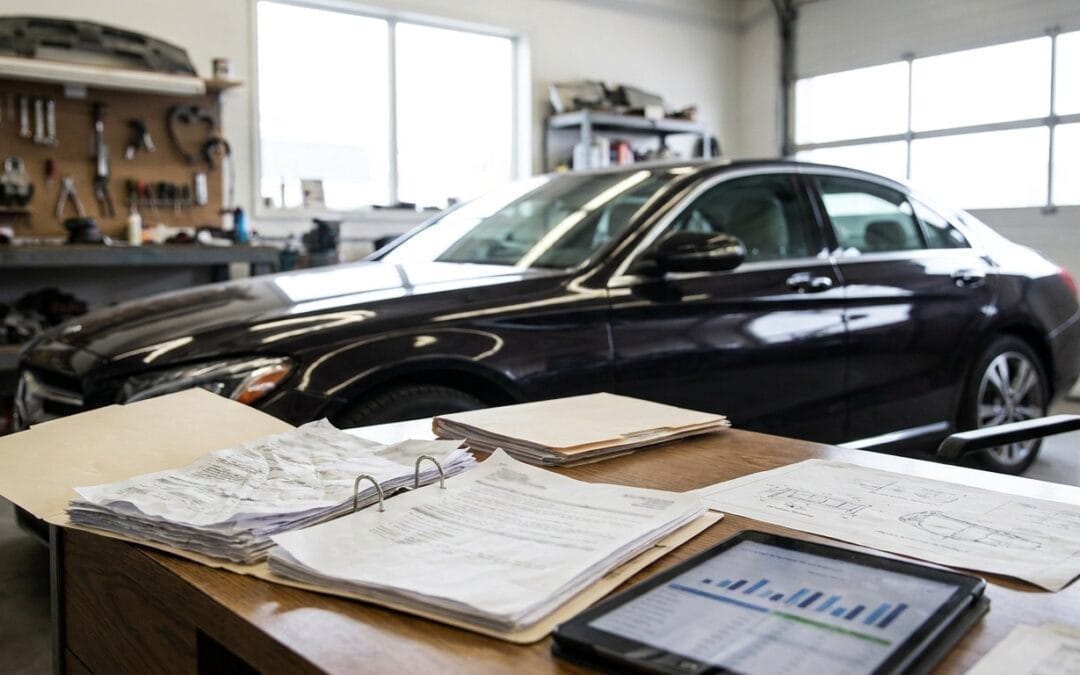
Even after a flawless repair, a car that has been in an accident is usually worth less than one that has not, that gap is “diminished value,” and in California you may be able to recover it from the at-fault party. While a diminished value claim is...
The minutes and days after a car accident in Los Angeles set up everything that follows, your safety, your claim, and how smoothly your car gets repaired. Most guides stop at “call the police”; this one carries you through the repair side too, because what...
If your collision repair bill grew after you dropped the car off, you ran into a supplement, and it is usually a good sign, not a scam. A supplement is an addition to the original estimate for damage or operations that could not be seen until the car was taken apart....
If your car is in the shop after a collision, whether you get a rental, and who pays for it, depends on your coverage and who was at fault. In California, a rental during repairs comes from either your own rental reimbursement coverage or the at-fault driver’s...
Whether a collision repair shows up on CARFAX depends on whether the accident or repair was reported to a source CARFAX collects from, not on the repair itself. Many repairs do appear; some never do. If you are worried about your car’s history report after a...
A collision repair estimate can look like a wall of codes and abbreviations, but once you know the parts, it tells a clear story about what will be done to your car and who pays for what. Learning to read a collision repair estimate helps you spot missing operations,...