

What Does Car Break-In Repair in Los Angeles Actually Cost?
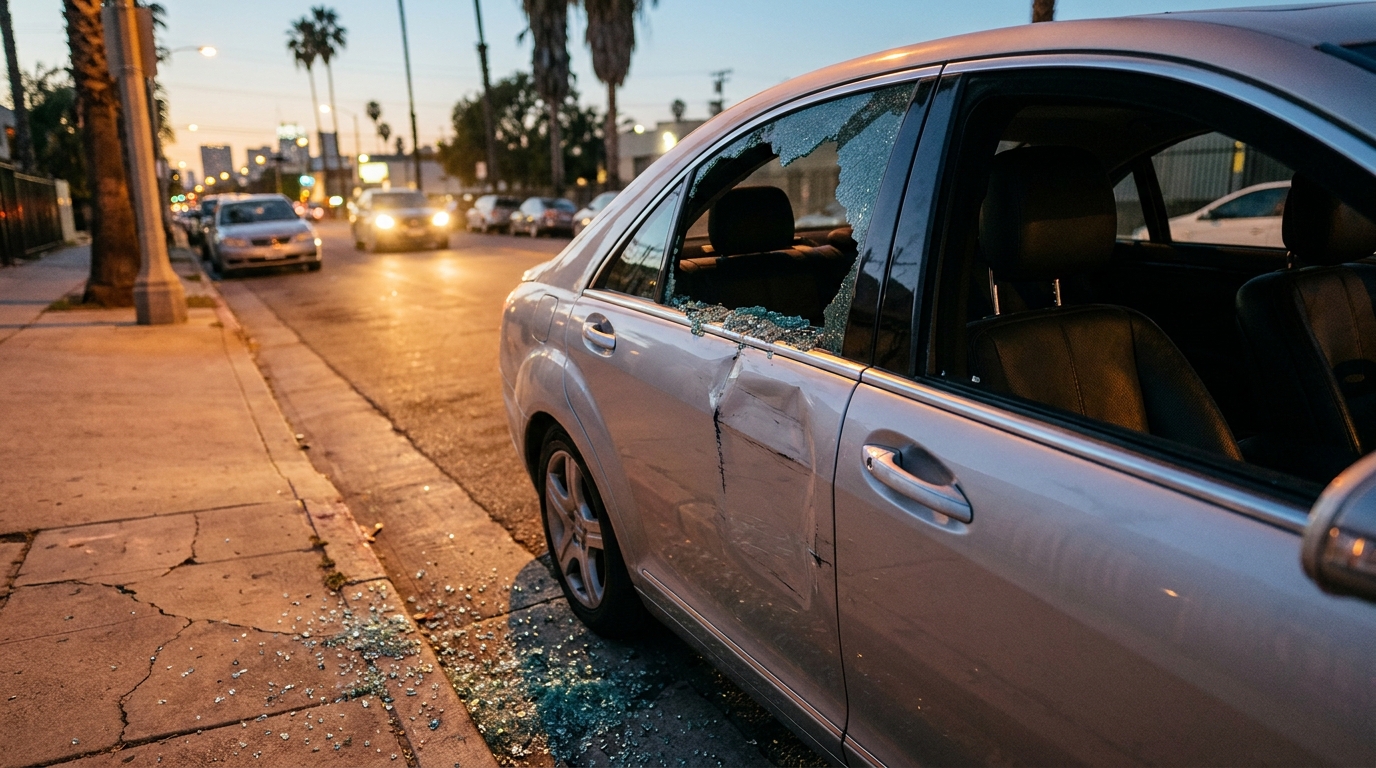
The short answer: expect $500 to $3,500 or more once you account for everything. A smashed side window alone runs $200–$350 before labor. Add pry-bar dents along the door edge, scratched or chipped paint where the tool bit the metal, a bent door frame that stops the glass from sealing, and mandatory ADAS sensor recalibration, and a single smash-and-grab incident can easily exceed $3,000 on a modern vehicle, and considerably more on a luxury car or EV. Vehicle break-ins are the most common property crime in Los Angeles, the annual count surpassed 30,000 in three of the six years between 2019 and 2024, and almost no glass shop explains what happens to the body after the window comes out.
This guide covers the body-damage side that glass specialists skip: every repair category, the LA-specific labor rate reality, the PDR-versus-repaint decision for pry-mark dents, the ADAS calibration step that stalls most repairs, and when filing a comprehensive insurance claim in California makes financial sense.
Why Is Car Break-In Repair in LA So Common, and So Costly?
Los Angeles recorded 32,153 vehicle break-ins in a single recent year, the highest annual total since 2018, with monthly counts hitting 3,135 in December and 3,141 in January, the first time those figures had topped 3,000 in 12 years. Incidents spike sharply in December when holiday shopping means cars in mall parking lots are full of visible merchandise, and remain elevated through January before trending down. High-density neighborhoods see the most volume: Downtown LA logged 959 break-in reports in just the first three months of one recent year, with Hollywood, Van Nuys, Venice, and Mid-Wilshire also among the hardest-hit areas.
The repair cost is elevated in LA for two reasons beyond volume. First, the SoCal labor rate swings dramatically, from roughly $56/hr in Van Nuys to $98/hr in West Hollywood, a gap of nearly 75%. Because labor accounts for more than half of every body-repair dollar, your ZIP code materially changes your estimate. Second, luxury vehicles and EVs, common targets in neighborhoods like Hancock Park, Brentwood, and West Hollywood, use aluminum body panels and house multiple ADAS sensors near windows and pillars, both of which add cost and repair time.
What Body Damage Does a Smash-and-Grab Actually Cause?
Glass shops focus on the window. A body shop has to assess four additional damage categories that are almost always present after a forcible entry:
- Pry-bar dents and creases along the door edge or B-pillar. Thieves lever the door gap to speed entry. This leaves elongated dents, often with nicked or cracked paint, running vertically along the door skin near the latch or hinge area.
- Bent or misaligned door frame. If the door was pried or the window was struck at an angle, the inner frame can deform enough that a replacement window no longer seals properly. Water leaks and wind noise are the symptoms; a frame-straightening procedure is the fix.
- Paint damage from the glass cascade. Tempered glass shatters into hundreds of pebbles. As those pieces slide down the interior door panel and tumble out, they abrade the painted window channel, sill, and sometimes the lower door skin. The scratches are fine but widespread and require color-matching and blending to repair invisibly.
- Interior damage. Glass pebbles embed in seat fabric and carpet. In some vehicles they work into door-panel speaker grilles, seat-track mechanisms, and storage pockets. A thorough glass-out clean is not the same as a detailing, it requires extraction of every fragment before it punctures a tire or injures a passenger.
PDR vs. Conventional Repair: Which Is Right for Pry-Bar Dents?
Paintless dent repair (PDR) is the fastest and least expensive fix for dents where the paint surface is intact. A skilled technician massages the metal back from behind the panel, no filler, no respray. For break-in damage, PDR works when the pry dent is a smooth depression and the paint has not cracked or chipped at the deformation point.
The problem with pry-bar marks is that the tool concentrates force on a small area, which almost always nicks or cracks the clearcoat at the sharpest point of the crease. That paint break rules out PDR for that specific zone. A technician may be able to use PDR on a portion of the dent and conventional filler-and-paint repair on the paint-damaged section, but the panel typically needs a respray regardless. Understanding when PDR works versus when conventional repair is the right call saves you from paying for PDR that cannot actually restore the panel to factory condition.
| Damage Type | PDR Eligible? | Typical Cost Range |
|---|---|---|
| Small smooth dent, paint intact | Yes | $150–$500 |
| Pry-bar crease, paint cracked or chipped | No, needs conventional repair | $500–$1,000+ |
| Large deformation or multiple dents | No | $1,000+ |
| Bent door frame (misaligned) | No, frame straightening required | $300–$800 additional |
What Is the Full Smash-and-Grab Repair Cost Breakdown?
Every break-in is different, but here is a realistic line-item breakdown for a common scenario, one side window smashed on a modern mid-size or luxury vehicle in LA:
| Repair Item | Low Estimate | High Estimate | Notes |
|---|---|---|---|
| Side window replacement (glass + labor) | $200 | $500 | Tempered glass; higher for laminated or heated options |
| Pry dent repair (paint intact, PDR) | $150 | $500 | Only if paint is undamaged |
| Pry dent + paint repair (conventional) | $500 | $1,000 | Includes blend to adjacent panel |
| Door frame straightening | $300 | $800 | Required if window no longer seals |
| Interior glass-out cleaning | $100 | $300 | Seat, carpet, door panel extraction |
| ADAS sensor recalibration | $150 | $600 | Required when side or windshield glass is replaced on equipped vehicles |
| Exterior door handle replacement | $150 | $1,000 | Only if handle was broken during entry |
| Realistic total | $700 | $3,500+ | EV/aluminum or luxury vehicles skew higher |
On aluminum-bodied vehicles, which include many luxury SUVs and most modern EVs, the door skin cannot be filled and re-shaped the same way as steel. Aluminum lacks the “memory” that lets steel respond predictably to PDR techniques, and requires specialized equipment and training. That raises both parts and labor cost. For a deeper explanation of what makes these repairs different, see our guide to aluminum-body vehicle repair.
Why Does ADAS Recalibration Matter After a Break-In?
This is the step most customers never hear about until it delays their car’s return, and it is where break-in repairs stall. Many modern vehicles embed side-facing cameras, radar units, or ultrasonic sensors in or near the B-pillar, door frame, and side mirror. When any adjacent glass is replaced, those sensors must be recalibrated to restore lane-departure warning, blind-spot monitoring, and cross-traffic alerts to factory spec.
Calibration requires either a static target setup in a controlled shop environment or a dynamic drive cycle on specified roads, sometimes both. If the glass shop installs your new window and does not perform calibration, your ADAS features may throw warning lights or, worse, operate incorrectly without any warning. On EVs with surround-view camera systems, a single uncalibrated side camera can disable parking-assist functions entirely. Our detailed breakdown of ADAS calibration after repair explains exactly what is involved and what to ask your shop to confirm in writing.
Does California Comprehensive Insurance Cover a Break-In?
Yes, comprehensive coverage (not liability) pays for glass breakage and body damage from theft, vandalism, and break-ins, minus your deductible. Deductibles typically range from $100 to $1,000 depending on your policy. Some insurers and endorsements, including certain AAA full safety glass options, waive or reduce the glass portion of the deductible to as low as $0–$50, which makes claiming the glass replacement essentially free even on a modest policy.
Two California-specific rules matter here:
- You choose the shop. Under California law, your insurer can recommend a preferred shop but cannot require you to use one for either glass or body work. You have the legal right to take your car to any licensed repair facility you choose.
- Personal items are not covered by auto insurance. A stolen laptop, camera, or bag falls under your homeowners or renters policy, not your auto policy. Document stolen items separately and contact your home insurer.
For a clear explanation of what each line on your estimate means and how insurers price repairs, our guide to reading a collision repair estimate walks through every item.
When Is a Comprehensive Claim Worth Filing vs. Paying Out of Pocket?
The answer depends on your deductible, the total repair cost, and whether you own a luxury or leased vehicle. Here is the math:
- Total repair under your deductible: Pay out of pocket. Filing a claim that pays nothing still creates a claims record that can affect your renewal rate.
- Total repair modestly above your deductible: Calculate whether the out-of-pocket savings justifies a potential rate increase. On a $250 deductible with a $700 total repair, the $450 payout may not be worth a multi-year premium bump.
- Total repair well above your deductible (e.g., $2,000+ on a $500 deductible): File the claim. The payout is substantial and one comprehensive claim typically has less impact on rates than an at-fault collision claim.
- Luxury or leased vehicle: File the claim. Diminished value is a real concern, documented pre-repair photos and a professional body shop estimate create the paper trail needed to support a diminished value claim in California if the car’s resale value is affected.
The Two-Vendor Problem, and How to Avoid It
A typical break-in sends LA drivers to three separate vendors: a mobile glass company for the window, a body shop for the dents and paint, and sometimes an upholstery or detailing shop for the interior glass cleanup. Each vendor writes their own estimate, and none of them coordinate on the ADAS calibration step, which often gets missed entirely because the glass shop assumes the body shop handles it and the body shop assumes the glass company already did it.
The smarter approach is a single shop that manages glass sourcing, body repair, paint blending, interior cleanup, and ADAS calibration under one roof with one estimate and one point of contact. That is what a full-service collision facility provides that a mobile glass van cannot. You also avoid the scenario where mismatched repair sequencing, painting before glass is installed, for example, forces rework and adds days to the timeline.
Common Mistakes to Avoid
- Cleaning out the glass yourself before an estimate. Photographing and documenting all glass scatter, interior damage, and paint scratches before touching anything protects your claim.
- Using a mobile glass van as your only repair vendor. Glass replacement is step one. Pry dents, paint damage, and calibration require a body shop, mobile glass companies are not equipped for any of those.
- Skipping ADAS recalibration to save money. An uncalibrated blind-spot or lane-departure sensor is a safety issue, not just a warning-light nuisance.
- Assuming your deductible covers the whole repair. If the total estimate exceeds your deductible and you paid the deductible, your insurer pays the remainder, you do not absorb the full bill.
- Filing a claim for a repair below your deductible. A zero-payout claim still goes on your record. Always get an estimate first, then decide whether to file.
- Letting the insurer assign the shop without knowing your rights. In California, you choose the repair shop. Insurer-preferred shops are not always the best option for a luxury vehicle or for shops with aluminum-repair certification.
- Ignoring paint blending on adjacent panels. A freshly sprayed door next to an un-blended fender will show a color mismatch within months under LA sun. Always confirm the estimate includes blending.
Frequently Asked Questions
How much does car break-in repair in Los Angeles typically cost?
For a single window smash with minor pry-bar damage and no ADAS calibration, expect $500–$1,200. Add conventional paint repair, door frame straightening, and sensor recalibration and the range moves to $1,500–$3,500. On luxury or EV aluminum-bodied vehicles, costs can exceed $5,000, particularly if parts lead times are long.
Does comprehensive insurance cover smash-and-grab body damage in California?
Yes. Comprehensive coverage pays for glass replacement and body damage caused by break-ins, theft attempts, and vandalism, minus your deductible. If your policy includes a glass endorsement, the glass deductible may be reduced to zero. Personal items stolen from the car are not covered by auto insurance and must be claimed under homeowners or renters insurance.
Do I have to use my insurer’s preferred body shop in California?
No. California law gives you the right to choose your own repair facility for both glass and body work. Your insurer can suggest a preferred vendor but cannot mandate it. If your vehicle is a luxury model or EV that requires specialized aluminum-repair equipment or specific ADAS calibration tools, choosing a shop with those capabilities matters more than using the insurer’s list.
Can paintless dent repair fix pry-bar marks from a break-in?
Sometimes partially. PDR works when the metal is dented but the paint surface is fully intact. Pry-bar marks almost always crack or chip the paint at the sharpest point of the crease, which rules out pure PDR for that zone. A body shop can use PDR on undamaged sections and conventional repair where the paint broke, but a full panel respray is usually necessary regardless.
Why does ADAS recalibration come up in break-in repairs?
Modern vehicles place blind-spot radar, side cameras, and ultrasonic sensors in or near the B-pillar, door frame, and mirror housing. When side glass adjacent to those sensors is removed and replaced, the sensors must be recalibrated to restored accuracy. Skipping this step can cause false alerts or, more seriously, silent sensor failure, where the system appears active but is not operating within spec.
0 Comments